
How do I choose a cataract surgeon in Sydney?How do I choose a cataract surgeon in Sydney?
Choose a cataract surgeon with specialist qualifications, current experience relevant to your eyes, and a clear plan for your operation and aftercare. Ask how they assess the retina, choose a lens implant and manage complications. You should understand the recommendation and feel comfortable asking questions before deciding.


If you are searching for the “best cataract surgeon in Sydney”, a useful starting point is to look beyond rankings and compare the care you would actually receive. Your eye health, visual goals and the surgeon’s relevant experience matter more than a single label. This checklist can help you make that comparison.
What qualifications should I check?
Check that the doctor holds specialist registration in ophthalmology on the Australian Health Practitioner Regulation Agency (Ahpra) register. The register shows registration details and any published conditions. A medical degree and specialist ophthalmology training are different milestones: ask when the surgeon completed specialist training, rather than relying only on the year they graduated from medical school.
FRANZCO means Fellow of the Royal Australian and New Zealand College of Ophthalmologists. A surgeon’s biography may also describe additional advanced subspecialist fellowship training in different areas of eye surgery, e.g. retinal surgery, corneal surgery or glaucoma surgery. Check what that training involved and how it relates to your needs. Overseas qualifications and Australian specialist registration are not interchangeable.
Your optometrist or GP can explain why they have recommended a particular surgeon. A referral is a useful introduction, and you can still ask about alternatives or obtain another opinion.

How much experience does the surgeon have with eyes like mine?
Ask about both years of specialist practice and current, relevant surgical experience. A long career gives context, but years alone do not describe someone’s present practice. Similarly, an impressive lifetime operation count does not tell you how often they treat your particular problem.
Useful questions include:
- How long have you practised as a specialist ophthalmologist?
- How regularly do you perform cataract surgery now?
- What experience do you have with eyes like mine?
- Do you manage complex cataracts and complications, as well as routine cases?
- How do you review your surgical results and learn from complications?
Relevant experience may include high myopia, previous retinal surgery, a dense cataract, a small pupil or weak support for the natural lens. These are reasons to discuss an individual plan, not reasons to assume surgery will go badly.
Will the surgeon assess the whole eye, including the retina?
A cataract is a cloudy lens, but the retina at the back of the eye also needs to function well for clear vision. Ask whether anything besides the cataract could limit the result or affect the choice of lens implant.
The assessment may include a dilated examination and, where indicated, imaging. An OCT scan shows the layers of the macula, the central part of the retina used for detailed vision. It can help identify problems that are not explained by the cataract alone. A macular OCT scan does not replace examination of the peripheral retina. Widefield photographs can be helpful, but the examination and the images answer different questions.
This discussion is particularly relevant if you are very short-sighted, have had a retinal tear or detachment, or have had previous eye surgery. Tell the surgeon about previous laser treatment and any recent new visual symptoms. If a dense cataract prevents a clear view, ask how the back of the eye will be assessed and what uncertainty remains.
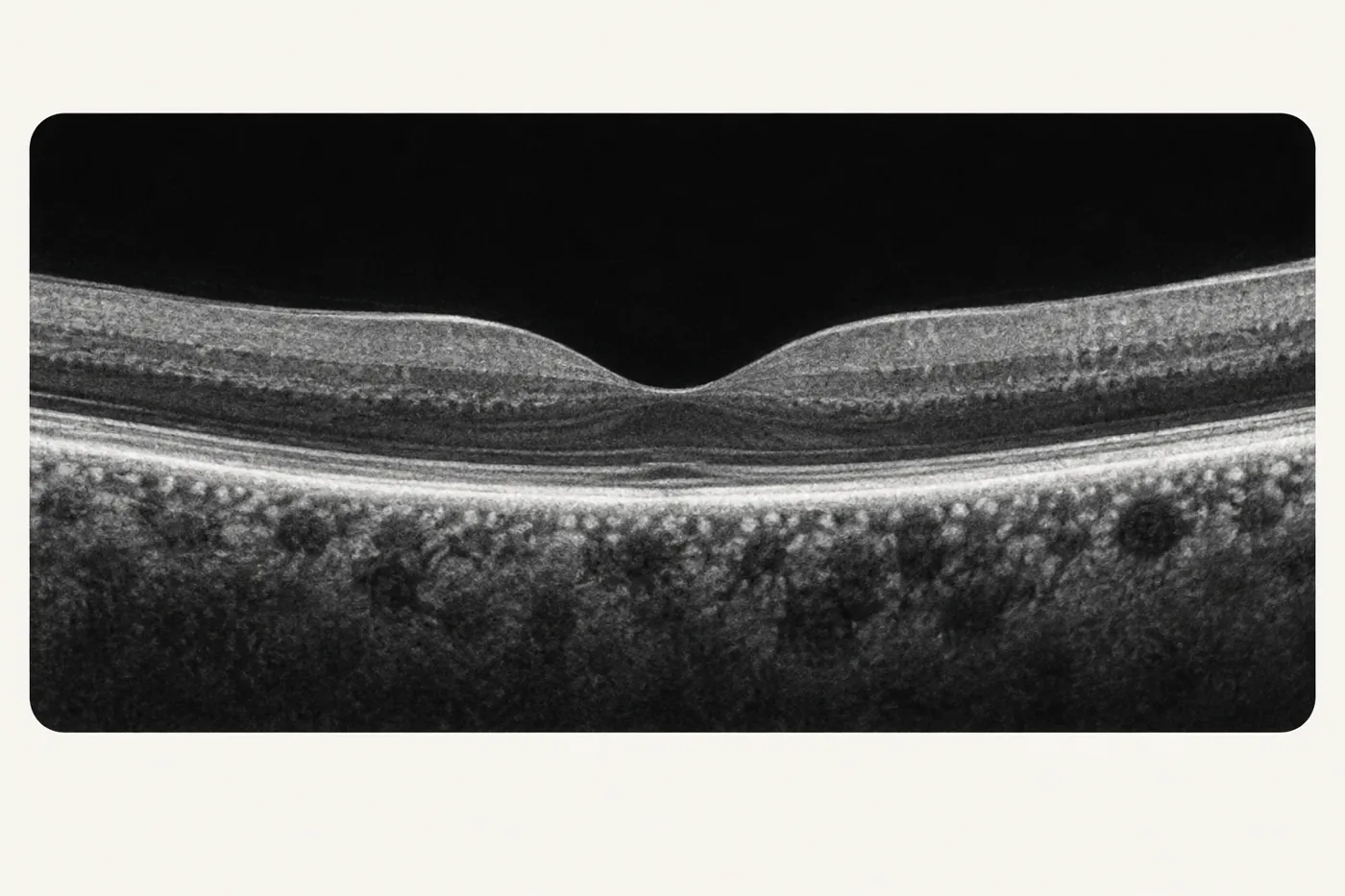
Should retinal weak spots be treated before cataract surgery?
Some retinal tears need treatment; not every thin patch needs laser. A tear that is at risk of progressing to retinal detachment may need laser or freezing treatment before cataract surgery. Ask what has been found, why treatment is recommended and whether it changes the timing of your operation.
Lattice degeneration is an area of thinning in the peripheral retina. Most people with lattice do not need preventive treatment. Evidence does not support promising that routinely lasering every symptom-free patch will prevent a detachment after cataract surgery. The decision depends on the lesion and the wider clinical picture.
A useful question is: “Does my retina need treatment before cataract surgery, or is observation more appropriate?” Neither a normal examination nor preventive treatment eliminates the possibility of a future retinal tear. If you develop new flashes, a sudden increase in floaters or a curtain across your vision, seek urgent assessment. Read more about retinal tears and detachment.
Two different retinal findings
- A tear that needs treatment
- Discuss laser or freezing treatment and the timing of surgery.
- Symptom-free lattice degeneration
- Often observed. Ask why treatment would help in your particular case.
What happens if there is a complication?
Ask who will recognise a problem, who will treat it and where that treatment would happen. Complications can occur despite careful surgery. A clear explanation of the response is more reassuring than a promise that nothing can go wrong.
A surgeon should be able to discuss your individual risks and explain what support is available during and after the operation. Three examples help make that conversation concrete.
What if part of the cataract drops into the back of the eye?
The natural lens sits in a thin capsule. If the capsule tears during surgery, some lens material can move into the vitreous cavity behind it. This is sometimes called a “dropped nucleus” or retained lens fragments; it is not the same as the artificial lens implant slipping out of position.
Significant fragments may need a vitreoretinal surgeon to remove them with a vitrectomy. Some small fragments can be managed differently. The timing depends on the eye’s condition and the specialist’s assessment.
What if an infection develops inside the eye?
Endophthalmitis is a serious infection inside the eye. It needs urgent specialist assessment and usually antibiotics injected into the eye; some patients also need vitrectomy. Ask how urgent care is arranged outside normal consulting hours and whether there is a direct route to the treating team.
What if the retina detaches?
A retinal detachment needs urgent assessment by an appropriately experienced ophthalmologist. Repair may involve vitrectomy or another retinal procedure, depending on the detachment. It can occur after the initial recovery period, so you should know the warning symptoms and whom to contact later as well as immediately after surgery.
Does the surgeon need to be a retinal surgeon too?
Many cataract surgeons provide excellent care with support from retinal colleagues. Being referred when specialist treatment is needed is appropriate care, not evidence that the original surgeon is unskilled.
A surgeon trained in both cataract and vitreoretinal surgery may be able to assess and treat a wider range of problems within the same care relationship. This can be relevant for patients with retinal disease, previous retinal surgery or certain complex cataracts. It does not mean every complication can be managed immediately in the same operating theatre, or that referral will never be needed.
Training is one part of the picture. The necessary instruments, theatre team, hospital arrangements and surgeon availability also matter. Ask:
- Which complications can you manage yourself?
- Is the necessary retinal equipment and expertise available at the hospital where I would have surgery?
- If I need another specialist, how would that referral or transfer be arranged?
- Who remains responsible for coordinating my follow-up?
You are looking for a credible care plan, including a clear handover when needed. For more background, see complex cataract surgery.
Does research or teaching experience matter?
Research, publications and teaching can be signs of engagement with the profession and its developing knowledge. Ask whether a surgeon’s work relates to cataract surgery, lens implants or the problems relevant to your eyes. A peer-reviewed research paper, a conference presentation and a patient information article are different kinds of contribution.
Publication is not a guarantee of surgical expertise or a better result. A publication list does not show an individual surgeon’s complication rate. Equally, an excellent clinician may not publish research. Look at relevant contributions alongside current clinical work, continuing education and review of surgical outcomes.
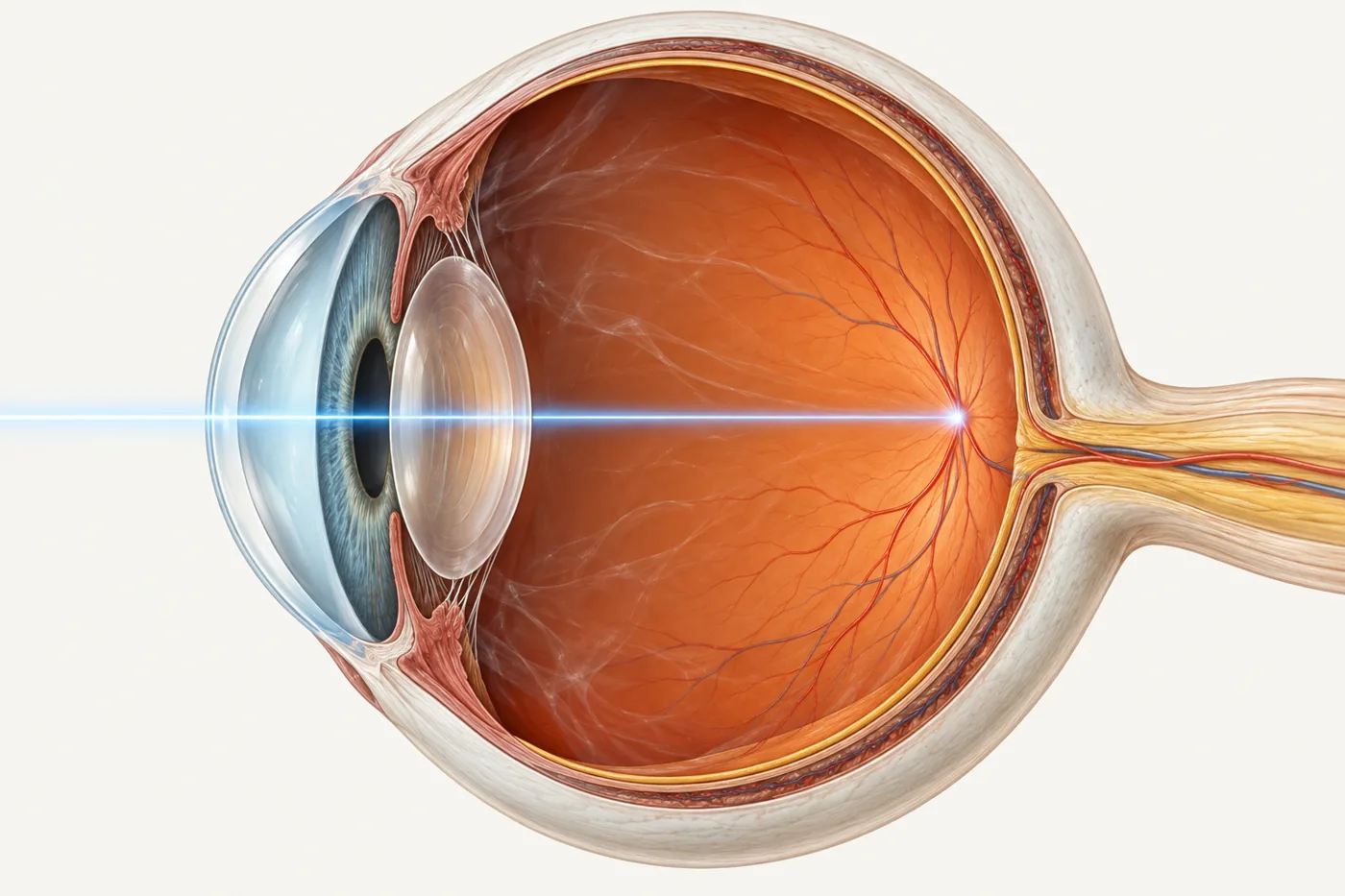
Will the surgeon explain why surgery and this lens are right for me?
You should leave knowing what the operation is intended to improve, what may limit the result and what could happen if you wait. Your everyday needs—such as driving, reading, work and hobbies—belong in that discussion. You should also be able to ask whether updated glasses or observation remain reasonable options.
Lens selection deserves its own conversation. Ask what range of vision you can expect, when you may still need glasses and which trade-offs matter for your eyes. An expensive lens is not automatically the most suitable lens. Existing retinal or corneal disease, previous surgery and your tolerance of optical side effects can influence the recommendation.
Ask whether more than one lens type is suitable and why one is preferred. The explanation should make sense to you without relying on brand names. Our guide to lens implants explains the main choices.
What about complex lens calculations and unusual eyes?
Ask how the surgeon and measurement team handle eyes for which standard calculations are less predictable. Previous LASIK, PRK or radial keratotomy, an irregular cornea, very long or short eyes and a planned lens exchange may require additional measurements and specialised calculation methods.
Useful questions are: “Have you treated eyes with this problem before?”, “How will you cross-check my measurements?” and “How much uncertainty remains in the predicted focus?” Old laser surgery records can be useful if you have them. There should also be a discussion about what happens if the eventual focus differs from the target. Careful planning improves the basis for a decision; it cannot promise complete freedom from glasses.
Can an established refractive surgery team help?
For someone who has previously had laser vision correction, relevant experience extends beyond routine cataract surgery. A team familiar with different generations of refractive treatment can help assess the altered cornea, cross-check lens calculations and seek corneal or retinal input when needed.
Ask about the people involved: who takes and checks the measurements, what experience they have with eyes like yours, and how the surgeon handles disagreement between calculations.
As a practical example in Sydney, surgeons at Vision Eye Institute Chatswood co-authored a 2020 study comparing lens calculations in eyes with previous laser refractive surgery. It demonstrates research directly relevant to this problem. The practice’s history explains how its refractive, corneal and cataract work developed.
Does the newest technology mean a better surgeon?
Equipment matters when it helps answer a clinical question or carry out a planned step. It is not a substitute for judgement, training or careful follow-up. Ask what a test or technology adds in your circumstances, whether it changes the plan and whether there is an additional charge.
For example, measurements help plan lens power, while retinal imaging assesses a different part of the eye. Laser-assisted surgery is another choice to discuss; its availability alone does not establish that a surgeon is better. Read about cataract surgery technology and ask which parts are relevant to you.
Can watching the surgeon’s videos help?
Surgical videos can help you understand the steps of an operation and the kinds of cases a surgeon manages. They may also give you useful questions about technique or complex-case experience. Look for a clear explanation of what is being shown, whether the recording is edited and how the case differs from yours.
Videos are selected examples, not an audit of all operations or proof of better outcomes. You do not need to watch surgery to make a good decision, and surgical footage can be confronting. If you prefer, ask for a non-graphic explanation or an animation.
Routine cataract surgery performed by Dr Simon Chen
Watch Dr Chen perform this surgeryWho is on the anaesthetic team?
Ask who will provide your anaesthetic care, what experience they have with eye surgery and how they work with the surgeon and nursing team. If an anaesthetist is involved, ask whether they are a specialist anaesthetist and how your health will be assessed beforehand.
Cataract surgery may use numbing drops, an eye block, sedation or, in selected circumstances, general anaesthesia. The plan should suit your health, the operation and your needs. Discuss anxiety, difficulty lying flat or keeping still, breathing problems, medicines, allergies and previous anaesthetic difficulties. Ask who monitors you during the operation and what happens if you become uncomfortable.
More sedation is not automatically better. Ask what you are likely to be aware of, how comfort will be managed, and what instructions apply to fasting, medicines and getting home.
Who looks after me after the operation?
Confirm who will perform the operation, who will see you afterwards and how the team handles an unexpected problem. Follow-up may involve the surgeon, another ophthalmologist or your optometrist, depending on the arrangements and your needs.
Ask for written instructions covering drops, planned reviews and contact details. If you are travelling across Sydney or coming from outside the city, work out transport, whether someone should stay with you and how you would obtain urgent review. A convenient operating location is useful; access to aftercare matters too.
Increasing pain, worsening vision, marked redness, new flashes or floaters, or a curtain-like shadow need prompt advice. Contact your treating team urgently rather than waiting for a scheduled review. If you cannot reach them, use an emergency eye service or emergency department.

What should I ask about fees?
Request an itemised estimate of likely out-of-pocket costs. Clarify the surgeon’s fee, anaesthetist, hospital, lens implant and any optional services. Check directly with your insurer where relevant, and ask what routine follow-up includes and how unexpected additional treatment would be billed. Public and private pathways have different waiting times, costs and choices.
How useful are Google and RateMDs reviews?
Online reviews on Google or RateMDs can offer useful insights into communication, explanations, organisation and patients’ experience of care. Look for recurring themes across several reviews rather than relying on a single comment.
Positive reviews can be encouraging, but ratings and rankings do not establish surgical excellence or safety. They reflect the experiences of people who chose to leave a review, rather than a clinical assessment of every patient’s outcome. Consider them alongside qualifications, relevant surgical experience, thorough assessment and aftercare.
Browse Sydney ophthalmologists on RateMDs →
Pay attention to your own consultation: were your questions answered, were uncertainties acknowledged, and did you understand the options? You should have time to consider the recommendation. A second opinion is reasonable if you remain unsure, especially before an irreversible decision about surgery or lens choice.
What are the most useful questions to take to my appointment?
- How long have you been a specialist, and what is your current experience with eyes like mine?
- Is cataract the main reason for my reduced vision, and what improvement is realistic?
- Has my retina been assessed, and does anything need treatment before surgery?
- Which lens do you recommend, why, and when might I still need glasses?
- What are my particular risks, and which complications can you manage yourself?
- If retinal treatment or another specialist is needed, how would it be arranged?
- Who will perform my operation, review me afterwards and answer an urgent call?
- Who provides my anaesthetic care, and what is their experience with eye surgery?
- If my lens calculations are complex, how will they be checked and explained?
- What will I pay, what is included, and is there a reasonable alternative to proceeding now?
Bring a written list and, if helpful, someone you trust. Choosing well means understanding the proposed care and knowing how the team will respond if your recovery does not go to plan.
How does Dr Simon Chen approach these areas?
Dr Simon Chen is a cataract and retinal surgeon at Vision Eye Institute Chatswood, Sydney. His practice brings together lens surgery and retinal assessment, including care for eyes with previous surgery or more complex needs.
- Training and relevant experience: his biography describes specialist training at Oxford and Cambridge and fellowships at Oxford Eye Hospital and the Lions Eye Institute. His clinical work includes complex cataracts, retinal surgery and lens implant exchange.
- Retinal assessment and complex planning: his technology guide describes retinal imaging, several independent eye measurements, specialised lens calculations and team checking. These are particularly relevant when previous surgery or unusual eye dimensions make planning more difficult.
- An established refractive surgery setting: the Chatswood practice began as The Eye Institute in 1997. Its clinicians have published research on lens calculations after laser vision correction. This provides relevant background for Dr Chen’s work with previously operated and complex eyes, alongside his own cataract and retinal experience.
- Research and education: his publications and teaching record includes cataract and retinal work. He has also written a professional article on managing a dropped nucleus. These contributions provide context for his interests and experience; they do not guarantee an individual outcome.
- Seeing the approach: his surgical video library includes routine and complex procedures. His cataract surgery guide explains anaesthetic options and recovery.
At your consultation, ask how this experience applies to your eyes, who will provide your anaesthetic care and what the specific complication and follow-up arrangements would be. The recommendation, expected benefits, uncertainties and costs should be clear before you decide.
Sources and further reading
Australian Commission on Safety and Quality in Health Care: Cataract Clinical Care Standard.
American Society of Retina Specialists: lattice degeneration.
American Society of Retina Specialists: retained lens fragments.
Australian Commission on Safety and Quality in Health Care: informed consent.
Lawless and colleagues: total keratometry in lens calculations after laser refractive surgery, 2020.
mivision: The (R)evolution of Ophthalmology, founder interviews, 2017.