
What causes cataracts?
Most cataracts develop because the eye’s natural lens gradually changes with age. Diabetes, steroid medicines, smoking, sunlight, eye injuries and some eye operations can bring these changes on earlier. Less commonly, cataracts are present from birth or are associated with inherited conditions, inflammation or other medical problems.

Often there is more than one contributing factor. Having a cataract does not mean you have neglected your eyes, and it is usually impossible to identify one particular event that caused it.
If you have recently been diagnosed, the useful questions are why the cataract may have developed, whether anything else needs checking, and how much it is affecting your vision.
What changes inside the eye when a cataract forms?
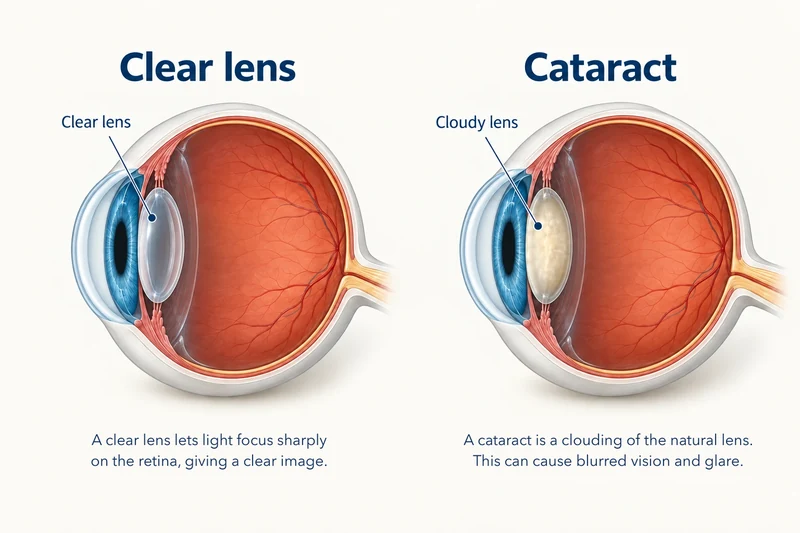
The natural lens sits inside the eye, just behind the coloured iris and pupil. It helps focus light onto the retina, the light-sensitive tissue at the back of the eye.
A healthy lens is transparent. Its proteins and fibres are arranged so that light can pass through with little scattering. With a cataract, this organisation changes and part of the lens becomes cloudy. Light is scattered or blocked, which can produce blurred vision, glare, difficulty seeing at night or colours that seem faded.
A cataract is within the lens. It is not a film growing over the front of the eye and cannot be washed away.
Why is ageing the most common cause?
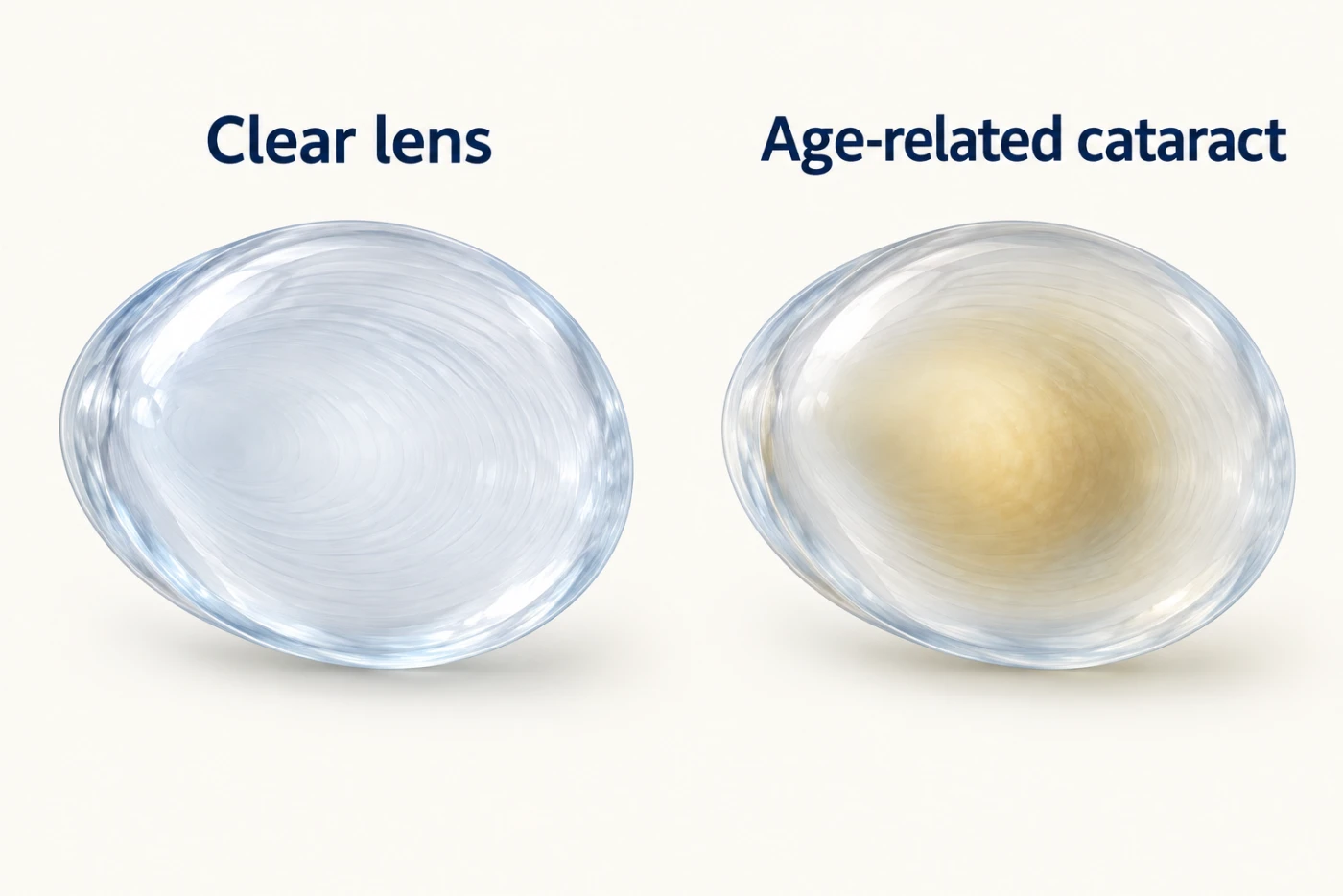
The lens contains long-lived proteins that gradually change over the years. Some become damaged or clump together; the lens can also become denser and more yellow. Eventually these changes interfere with the passage of light.
This is usually a gradual process. Early changes may be found during a routine examination before you have noticed a problem. Later, you may need more light to read, feel less comfortable driving at night, or find that new glasses no longer give clear enough vision.
There is no single age at which cataracts start, and people of the same age can have very different lenses. In an older adult with a typical cataract, ageing may be the main explanation even when there are no other identifiable risk factors.
How does diabetes contribute to cataracts?
People with diabetes are more likely to develop cataracts, and they may develop them earlier. Higher glucose levels alter the chemical environment inside the lens. Changes in sugar processing, water balance and lens proteins can contribute to clouding.
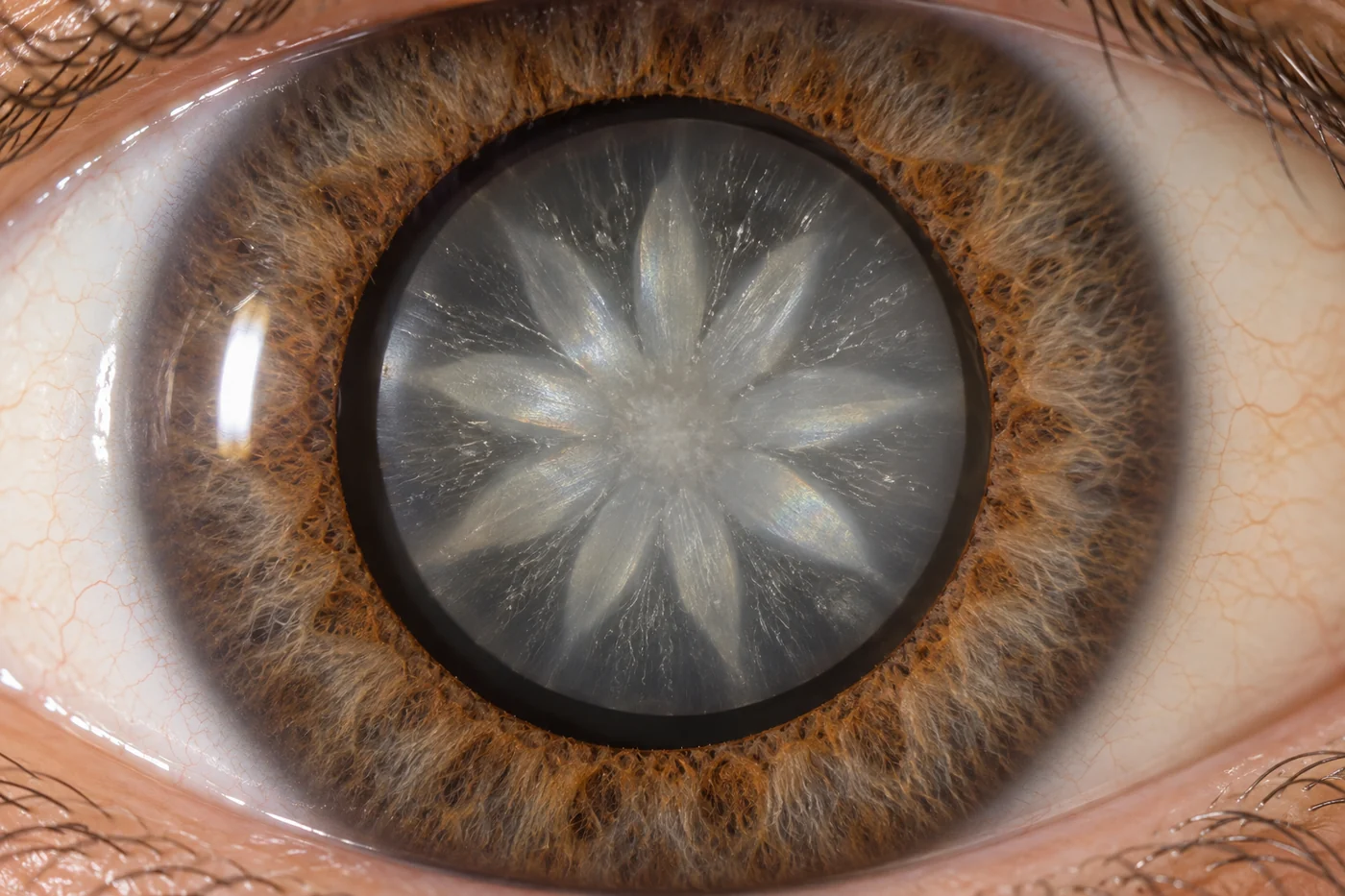
The most usual situation is an age-related cataract developing earlier or progressing alongside diabetes. A much less common pattern, sometimes called a snowflake cataract, can develop rapidly in a younger person with very high blood glucose, particularly with type 1 diabetes.
Blood glucose management matters for eye health, but a cataract does not automatically mean that your diabetes has been poorly managed. Cataracts can occur despite careful treatment, and ageing and other factors still play a part.
There are also several different reasons for blurred vision in diabetes. Changes in blood glucose can temporarily alter focusing without a permanent cataract. Diabetes can separately affect the retina. An eye examination helps establish which problem is responsible; cataract surgery does not treat diabetic retinal disease.
Which medicines can cause cataracts?
Corticosteroids are the main medicine group associated with cataracts. They are anti-inflammatory medicines used for many conditions, including asthma, autoimmune disease and inflammation inside the eye. They are different from anabolic steroids used for muscle building.
Long-term steroid exposure can affect lens cells and is particularly associated with a cataract near the back of the lens, called a posterior subcapsular cataract. Risk depends on the medicine, dose, duration, route and individual susceptibility.
Relevant exposure can include steroid tablets, prolonged steroid eye-drop treatment, and injections or implants that deliver steroid into or around the eye. High-dose inhaled steroids used over a long period have also been associated with cataracts. These routes do not all carry the same risk, and a short course should not be equated with years of treatment.
Do not stop prescribed steroids or an asthma inhaler because of a cataract diagnosis. These medicines may be essential, and abruptly stopping some treatments can be harmful. The useful step is to let your prescribing doctor and ophthalmologist review the treatment together and decide whether monitoring or a treatment adjustment is appropriate.
Less commonly, some older medicines in the phenothiazine group, used for certain mental health conditions, can produce deposits in the lens during prolonged treatment. This does not mean that all psychiatric medicines cause cataracts. Bring a current medicine list, including eye drops, inhalers and creams, rather than trying to identify a culprit yourself.
What part do sunlight, smoking, alcohol and diet play?
Can sunlight cause cataracts?
Long-term ultraviolet exposure from the sun contributes to cataract risk. This is cumulative exposure over time, rather than a cataract appearing after a single bright afternoon.

In Australia, choose sunglasses labelled as meeting the Australian standard, preferably with good side coverage, and wear a broad-brimmed hat outdoors. Darker lenses are not automatically better at blocking ultraviolet light. These measures protect your eyes, but they cannot guarantee that you will never develop cataracts.
Does smoking increase the risk?
Yes. Smoking is a recognised cataract risk factor. Tobacco exposure contributes to damage within the lens and is particularly associated with changes in its central nucleus.

Stopping smoking is worthwhile for your eyes and general health. It does not remove an existing cataract, and a cataract in someone who has smoked cannot necessarily be attributed entirely to smoking.
Is alcohol a cause?
Heavy alcohol intake is commonly listed as a risk factor, but the research is less consistent than it is for smoking or diabetes. Some observational studies have even found lower rates of cataract surgery among people reporting low or moderate alcohol intake.

Those findings do not prove that alcohol protects the lens: drinking patterns are linked to many other health and social factors, and the decision to have surgery is not the same as the biological development of a cataract. There is no reason to start drinking, or increase drinking, to prevent cataracts.
Can poor nutrition contribute?
Poor nutrition may contribute to cataract risk, but an ordinary age-related cataract is not usually a sign of one missing vitamin. A varied, balanced diet supports general health; no particular food is a proven way to clear a cloudy lens.

Large AREDS and AREDS2 studies did not show an overall cataract benefit from the tested supplement combinations. Supplements recommended for particular stages of macular degeneration have a different purpose and should not be mistaken for cataract treatment.
Can an old eye injury cause a cataract years later?
Yes. A blow to the eye, a penetrating injury or damage to the lens capsule—the thin envelope around the lens—can disrupt the lens and cause clouding.
Some traumatic cataracts appear soon after an injury. Others become apparent months or years later, even when the original injury seemed to settle. A childhood sporting injury, accident with a tool or previous penetrating injury may therefore still be relevant.
The affected eye may develop a cataract while the other eye remains relatively clear. The same injury can also damage the lens supports, iris or retina, which may influence treatment planning. Tell your ophthalmologist about old injuries, even if they did not require an operation at the time.
Protective eyewear is useful when doing activities with a risk of flying particles or impact. Ordinary sunglasses are not a substitute for suitable safety eyewear.
How can inflammation or another eye condition contribute?
What is the connection with uveitis?
Uveitis is inflammation inside the eye. Persistent or repeated inflammation can disturb the lens and encourage cataract formation. Steroids used to control that inflammation can also contribute, so there may be two overlapping reasons for a cataract.
The answer is not simply to stop anti-inflammatory treatment: uncontrolled inflammation can itself damage vision. If surgery is needed, controlling the inflammation is an important part of planning it. Some infections cause inflammation inside the eye, but this is different from an ordinary episode of surface conjunctivitis.
Does being very short-sighted increase risk?
People with high myopia—a strong degree of short-sightedness—have an increased likelihood of certain cataract types. This is an association seen in long-term studies, including Australian research.
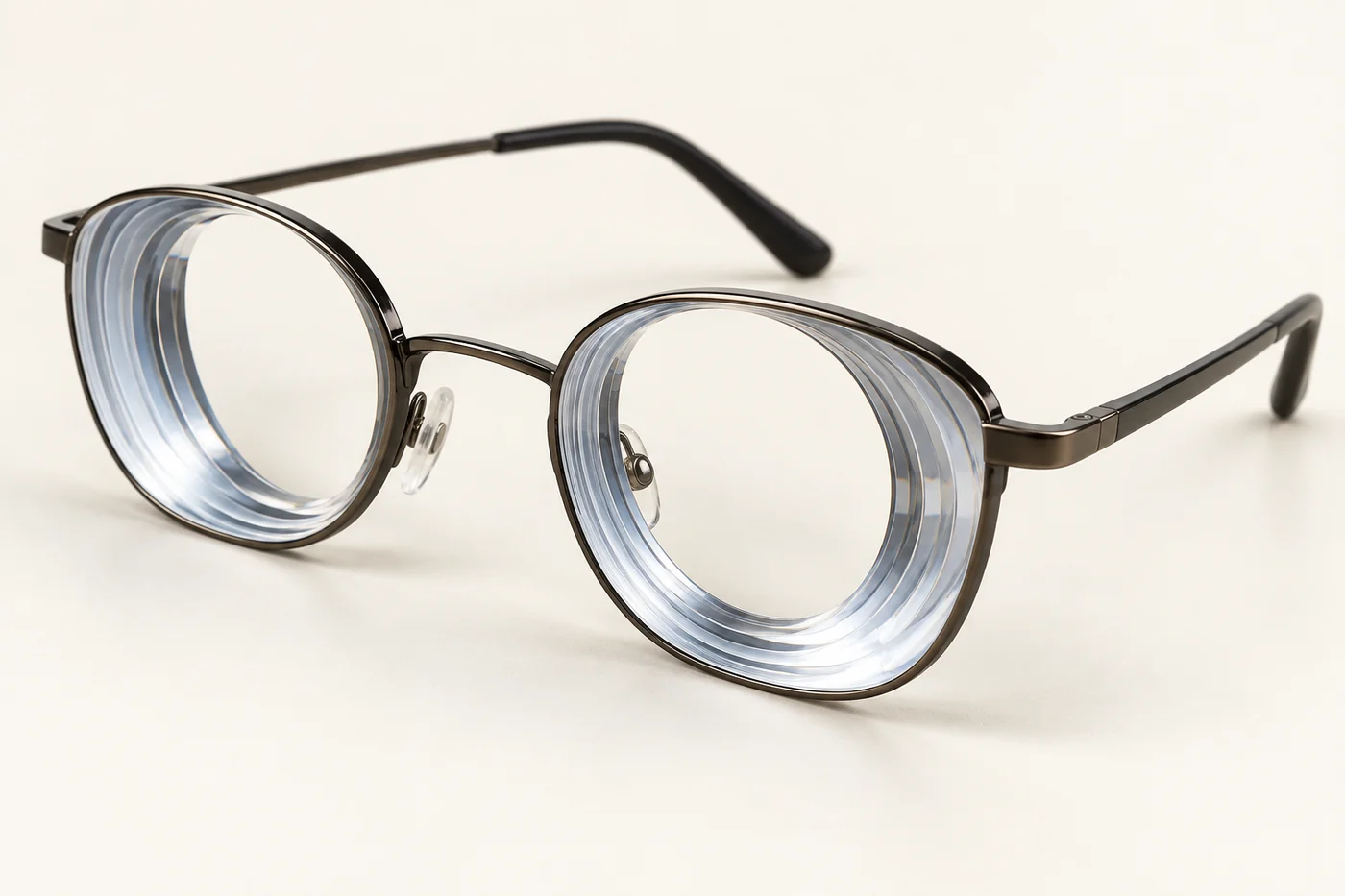
There is an easy source of confusion here: a developing nuclear cataract can itself make an eye more short-sighted. Someone whose distance glasses suddenly need a stronger prescription has not necessarily developed a cataract because of myopia; the prescription change may be an effect of the cataract.
What about retinal disease?
Some inherited retinal conditions, particularly retinitis pigmentosa, are associated with cataracts, sometimes at a younger age. Retinitis pigmentosa affects the light-sensitive cells of the retina and can cause difficulty with night vision and peripheral vision.
A cataract can add another layer of blur, but removing it does not cure the underlying retinal condition. Having a common retinal condition does not automatically mean that it caused your cataract; the two may simply coexist.
Why can cataracts develop after eye surgery?
Certain operations can accelerate cataract formation when the natural lens is still present. This is especially relevant after vitrectomy, surgery that removes the vitreous gel from the back of the eye.
The gel normally helps maintain the eye’s internal environment. After it is removed, oxygen exposure near the lens increases. Research supports this as one explanation for faster clouding of the lens nucleus. Age and the state of the lens before surgery also matter.
A cataract developing after vitrectomy is a recognised consequence and does not, by itself, mean the operation went wrong. Read more about vitrectomy surgery.
Cataracts may also develop or progress after some other operations inside the eye, including certain glaucoma procedures. Another example is a phakic lens implant, an additional lens placed inside the eye to correct a glasses prescription while leaving the natural lens in place. Cataract is a recognised potential complication of these implants; the risk depends on the individual situation and implant.
This is different from cataract surgery itself, which removes the cloudy natural lens. Clouding that occurs after cataract surgery is discussed below.
What are the less common causes in adults?
These causes matter most when cataracts occur unusually young, progress unexpectedly, have an unusual appearance or occur alongside other medical findings. Most people with a typical age-related cataract do not have one of these disorders.
Why do babies and children sometimes have cataracts?
A congenital cataract is present at birth. A developmental cataract appears as a child grows. These cataracts may have a different cause from the usual cataract in an older adult.
Some result from an inherited change affecting how the lens forms or stays clear. They may occur by themselves or as part of a wider condition, such as Down syndrome. In other children, no definite cause is found.
Infections during pregnancy, including rubella, cytomegalovirus and toxoplasmosis, can sometimes affect the developing lens. Rare metabolic disorders, such as galactosaemia—difficulty processing a particular sugar—can also cause cataracts. Injury, inflammation and steroid treatment are other possible causes after birth.
A small developmental opacity may have little effect on vision and be noticed only in adulthood. One example is a posterior polar cataract, a particular opacity at the back of the lens. It differs from the more usual acquired posterior subcapsular cataract and may be associated with a fragile lens capsule, which matters when planning surgery.
In a baby or young child, a cataract blocking vision can interfere with visual development. A white or grey-looking pupil needs urgent medical assessment, because other serious eye conditions can also cause this appearance. Poor visual responses or a new squint also need prompt medical assessment. Do not wait for a routine adult cataract appointment.
Do different cataract types have different causes?
The terms you hear at an examination often describe where the lens is cloudy, rather than a single cause.
What is a nuclear cataract?
This affects the central part of the lens, called the nucleus. The centre becomes denser and often more yellow or brown. It is strongly associated with ageing and may also develop more quickly after vitrectomy. It can change the glasses prescription towards short-sightedness.
What is a cortical cataract?
This affects the outer lens fibres, called the cortex. Cloudy wedges or spokes may extend inward from the edge. Ageing, diabetes and ultraviolet exposure can contribute. Glare may be troublesome, depending on where the cloudy areas lie.
What is a posterior subcapsular cataract?
This forms near the back of the lens, just inside its capsule. Even a relatively small central opacity can interfere with reading or cause glare in bright light. It is associated with steroid exposure, diabetes and inflammation, but can also occur without an obvious separate cause.
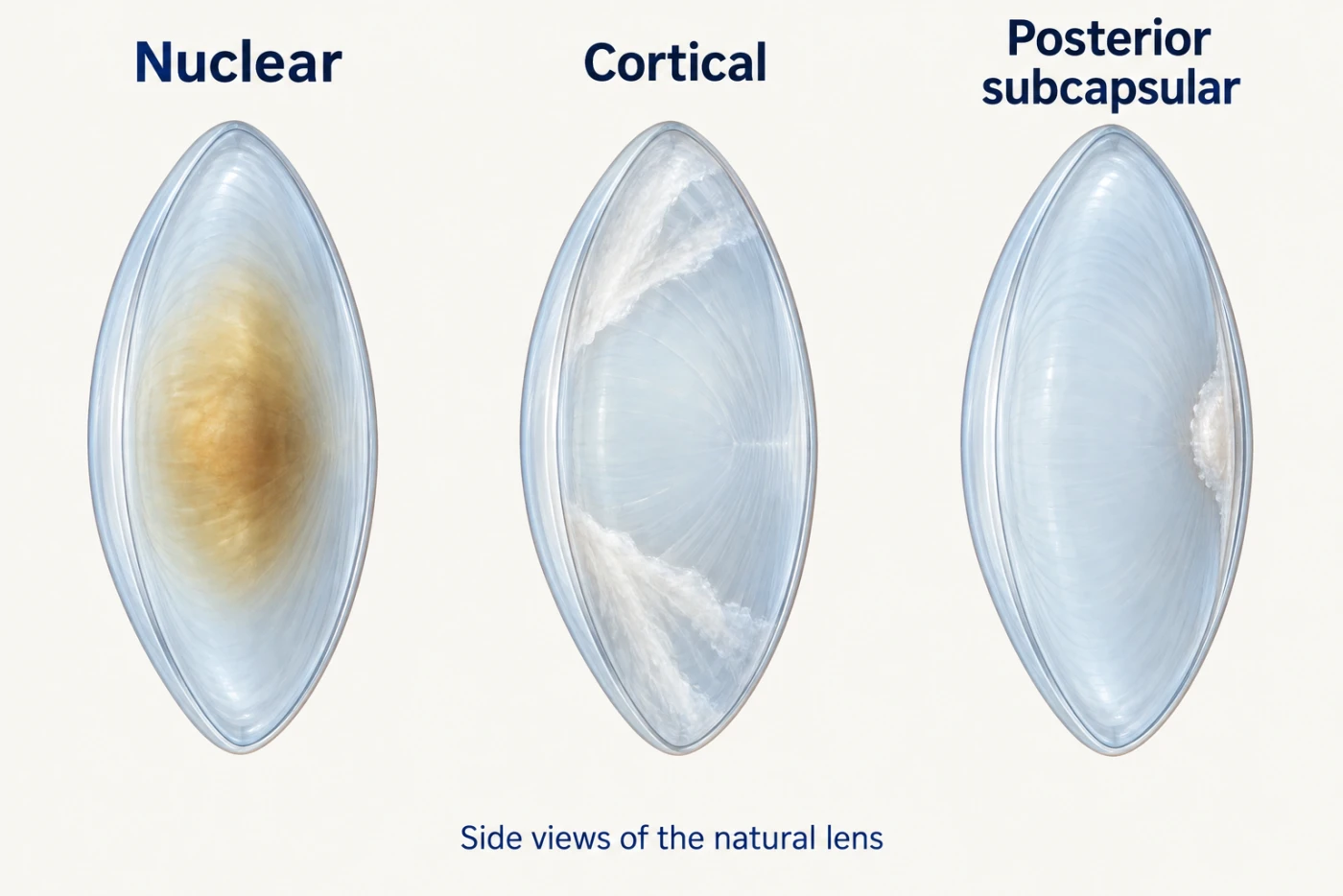
Other questions about cataract causes
Shorter answers to the questions that come up most often in clinic. Open one at a time, or open them all.
Why is one eye worse, and why can vision change quickly?
It is common for cataracts to develop at different rates in the two eyes. Uneven progression does not automatically indicate an unusual disease. However, a previous injury, operation, inflammation or treatment affecting one eye may help explain a large difference.
The effect on vision also depends on the location of the opacity. A small central posterior subcapsular cataract may be more noticeable than a larger cloudy area near the edge. Cataracts do not all follow a predictable timetable.
An unexpectedly rapid change should be examined rather than assumed to be “just the cataract”. Sudden loss of vision, a painful red eye, new flashes or a sudden shower of floaters, or a curtain or shadow across vision needs urgent assessment. These are not typical symptoms of an ordinary gradually developing cataract. Contact an eye-care service urgently or attend an emergency department.
Have I caused cataracts by reading or using screens?
No. Ordinary reading, computer use and wearing glasses are not recognised causes of cataracts. Screen use can cause eye strain or aggravate dryness, but that is different from clouding inside the lens.
Cataracts do not spread from one eye to the other. When both eyes are affected, they often share the same age-related, medical or environmental influences.
You can usually continue reading and other visual activities as comfort allows. More light, larger text or a glasses update may make them easier, although they do not clear the cataract itself.
Can I stop a cataract getting worse or reverse it?
You can reduce avoidable risks: stop smoking, protect your eyes from ultraviolet light and injury, manage diabetes with your usual care team, and have long-term steroid treatment reviewed and monitored appropriately.
These are worthwhile steps, but they do not reliably prevent cataracts or reverse an established age-related cataract. There are no proven eye drops, exercises or supplements that clear an ordinary age-related cataract.
Finding a contributing medical condition can still matter for your wider health and eye care. It does not necessarily mean the existing lens clouding will disappear once that condition is treated.
Surgery is the established treatment when a cataract needs to be removed. A mild cataract can often be monitored, with glasses or lighting changes helping in the meantime. The decision depends on the effect on your daily life, the rest of the eye and your preferences—not simply the presence of a cataract or the name of its cause.
Can a cataract come back after surgery?
The removed natural lens does not grow back. However, the thin capsule that supports the replacement lens can become cloudy later. This is called posterior capsule opacification, sometimes loosely called a “secondary cataract”.
It is a different process from developing a cataract in the natural lens. An examination can establish whether capsule clouding or another eye problem explains a change in vision after surgery. See the guide to cataract surgery and capsule clouding.
Can cataracts run in families?
Yes. Family history can influence susceptibility to ordinary age-related cataracts and the age at which they become noticeable. Family members may also share environmental exposures or medical conditions.
This is different from an inherited childhood cataract caused by a particular genetic change. Tell your ophthalmologist if several relatives needed cataract surgery unusually young, or if cataracts occurred in babies or children in your family. A parent having surgery late in life does not, by itself, suggest a rare inherited disorder.
Can eczema be associated with cataracts?
Atopic dermatitis, a form of eczema, is associated with cataracts in some people, particularly in the setting of severe or longstanding disease. Cataracts may occur at a younger age. Steroid exposure can also complicate the picture.
Having mild eczema does not mean you will develop an early cataract. If you have substantial eczema and notice a persistent change in vision, mention both the skin condition and its treatments at your eye examination.
Can radiation, intense heat or electrical injury cause cataracts?
Yes, but these are much less common explanations than ageing. Relevant exposures include:
- Ionising radiation: exposure involving the lens, such as some radiotherapy treatments or significant occupational exposure. The dose reaching the lens and the timing matter.
- Intense occupational infrared radiation and heat: historically associated with work such as glassmaking and furnaces without suitable protection.
- Electrical injury or a severe chemical eye injury: these can damage the lens as well as other parts of the eye.
These situations are very different from ordinary computer or phone use. If you have had radiotherapy, an industrial exposure or a serious injury, give your ophthalmologist the details rather than assuming that any exposure must have caused the cataract.
Which uncommon medical or inherited conditions are relevant?
A few examples help explain why an ophthalmologist sometimes asks questions beyond your eyes:
- Myotonic dystrophy: an inherited condition that can affect muscles and other organs. Cataracts may develop earlier than usual and can sometimes be an early clue. Muscle stiffness, weakness and family history may guide further assessment.
- Hypoparathyroidism and longstanding disturbances of calcium balance: an underactive parathyroid system can cause persistently low blood calcium and is associated with cataracts. This is a medical disorder, not the usual consequence of simply eating too little calcium.
- Wilson disease: a rare inherited problem with copper handling. Copper can produce a distinctive pattern of lens deposits sometimes called a sunflower cataract. This is different from the usual age-related cataract.
These are examples, not a self-diagnosis checklist. An eye examination and medical history guide whether any targeted blood tests, specialist assessment or genetic advice would be useful. Cataract alone is not a reason to order tests for every rare disease.
What should I discuss at my next eye appointment?
Bring your medicine list and mention diabetes, significant eczema, inflammation, old eye injuries, previous eye operations, radiation treatment and any family history of unusually early cataracts. These details can be more useful than trying to work out the cause from symptoms alone.
Useful questions include:
- Does my cataract look typical for my age, or is there a reason to look further?
- Could a medical condition, medicine or previous operation be contributing?
- Is the cataract the main reason for my visual difficulty, or is another part of the eye involved?
- Is monitoring reasonable, and which changes should prompt an earlier review?
- Does the cause affect the timing or planning of surgery?
For most people, the next step is to understand how the cataract is affecting vision and agree on a plan. The cataracts overview explains symptoms and assessment; the cataract surgery guide covers treatment when it becomes appropriate.
Sources and further reading
Patient information and established causes
- National Eye Institute: Causes of cataracts , types of cataract and cataract assessment and treatment .
- ARPANSA: Sun protection using sunglasses .
- NIDDK: Diabetic eye disease .
- NHS: Causes of childhood cataracts and symptoms needing assessment .
- Moorfields Eye Hospitals: Facts about cataracts .
- Merck Manual: Cataract .
- American Academy of Ophthalmology EyeWiki: Cataract types and causes , ocular effects of corticosteroids and computer vision syndrome ).
Research and less common causes
- Becker and colleagues: Cataract in patients with diabetes mellitus , Eye, 2018.
- Kanthan and colleagues: Myopia and the long-term incidence of cataract and cataract surgery , Clinical & Experimental Ophthalmology, 2014.
- Smeeth and colleagues: Inhaled corticosteroids and cataract , British Journal of Ophthalmology, 2003.
- Holekamp, Shui and Beebe: Oxygen exposure after vitrectomy , American Journal of Ophthalmology, 2005.
- Liew and colleagues: Cataract and other complications in retinitis pigmentosa , British Journal of Ophthalmology, 2019.
- Chua and colleagues: Alcohol consumption and cataract surgery in two UK cohorts , Ophthalmology, 2021.
- National Eye Institute: AREDS and AREDS2 supplement findings and uveitis treatment research .
- GeneReviews: Myotonic dystrophy type 1 and Wilson disease .
- Vadiveloo and colleagues: Complications of chronic hypoparathyroidism , Clinical Endocrinology, 2019.
- US Food and Drug Administration: Risks of phakic intraocular lenses .