
Dr Simon ChenCataract & Retina Surgeon
Location
中文
For referrersRefer a patientRequest an appointment

Vitrectomy surgery

Vitrectomy removes vitreous gel from inside the eye so that problems affecting the gel or retina can be treated. The additional steps depend on the condition being treated.

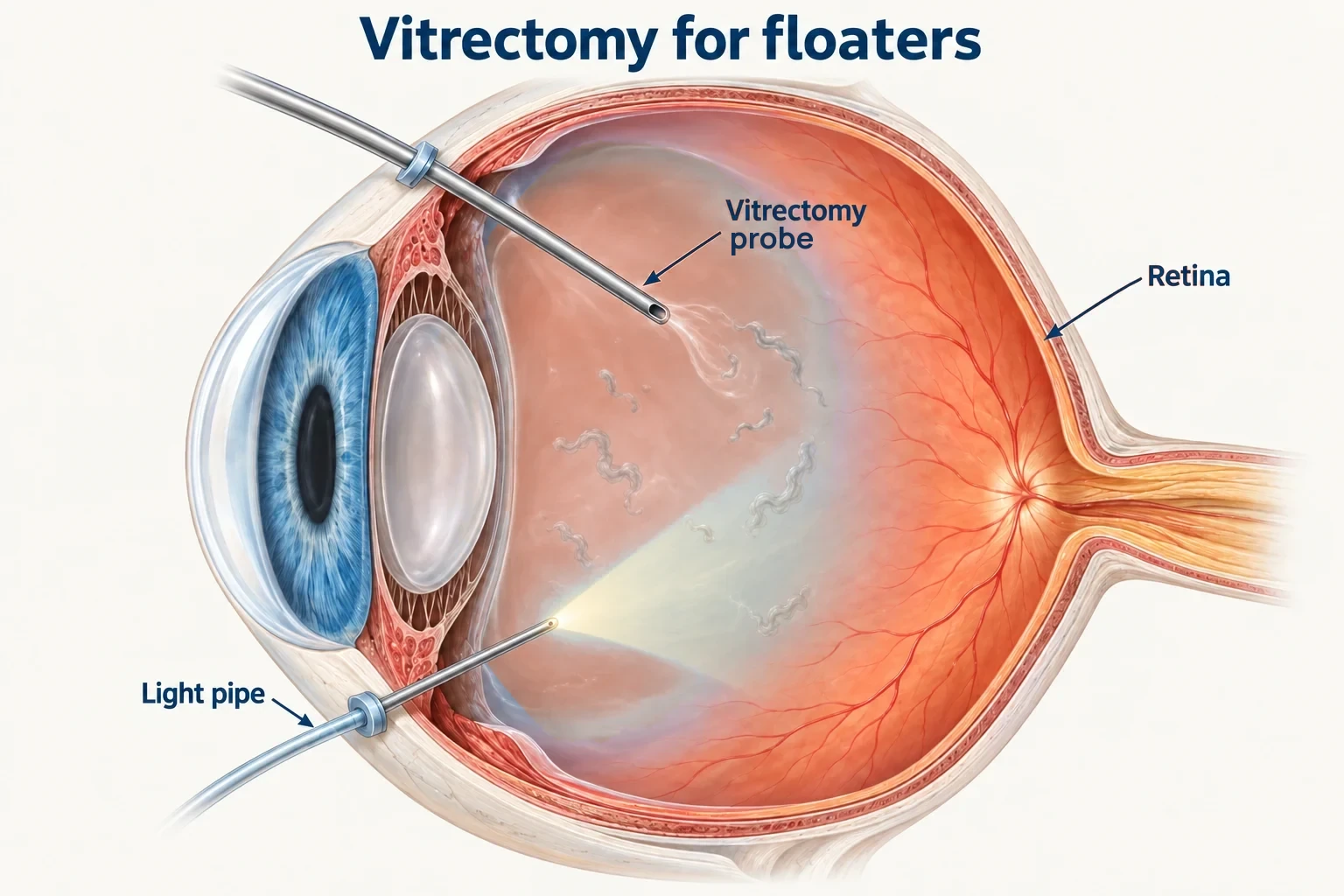
A vitrectomy probe removes vitreous gel containing floaters. A separate endoillumination light pipe lights the inside of the eye.Enlarge diagram

Vitrectomy for floaters. The probe removes gel and a separate light pipe illuminates the eye. An infusion line, not shown here, maintains fluid inside the eye. Other retinal operations involve additional steps.

Why might vitrectomy be recommended?

Vitrectomy gives the surgeon access to the back of the eye. It may be used to treat a retinal detachment, macular hole, epiretinal membrane, persistent bleeding, selected severe floaters, or displaced lens material after cataract surgery. Some infections or injuries also require it.

The aim may be to improve vision, protect remaining sight or prevent further damage. Observation, injections or laser may be alternatives for some conditions; the right choice depends on the diagnosis.

What happens during vitrectomy surgery?

Small openings in the eye wall

Vitrectomy is keyhole surgery for the eye. Fine instruments pass in and out through three openings in the white of the eye, each under a millimetre across. A vitrectomy probe removes the vitreous gel, a separate light illuminates the inside, and an infusion maintains fluid and pressure.
Treating the underlying problem

Additional steps may include peeling a membrane, sealing retinal breaks with laser or repairing a detachment. Vitrectomy is the access procedure; these steps address the reason for surgery.

What surgical system does Dr Chen use for vitrectomy?

Dr Chen performs vitrectomy with the Alcon UNITY Vitreoretinal Cataract System (VCS), through self-sealing openings of 23, 25 or 27 gauge chosen for your eye. The vitrectomy probe works at up to 30,000 cuts per minute, and the system controls eye pressure throughout the operation. ZEISS RESIGHT wide-angle viewing shows the far edge of the retina, and laser or freezing treatment can be applied during the same operation.

About the technology in Dr Chen’s practice

It is usually a day case procedure using local anaesthesia with intravenous sedation to ensure comfort. General anaesthesia may be appropriate in some circumstances. The duration, anaesthetic and discharge plan are tailored to your operation.

When is gas or silicone oil put in the eye?

Clear fluid

The gel does not grow back. The space can be filled with a sterile fluid, which is gradually replaced by fluid produced naturally inside the eye.

A temporary gas bubble

Air or gas may support the retina while it heals. Vision is very blurred through the bubble, and you may see its edge as it shrinks. The time to disappear depends on the gas used.

Silicone oil

Some more complex repairs need silicone oil for longer support. Oil does not absorb like gas and may need a later operation to remove it.

Head positioning

Head positioning is needed only when a gas bubble or silicone oil has been used. It is not usually needed for floater surgery or for an epiretinal membrane peel. When it is needed, follow the position and duration prescribed for your eye.

Which operations use gas or oil? Gas is used mainly for macular holes and retinal detachments; it is not typically needed for routine floater surgery or epiretinal membrane surgery. Silicone oil is used uncommonly, usually only for complex problems such as a complicated retinal detachment.

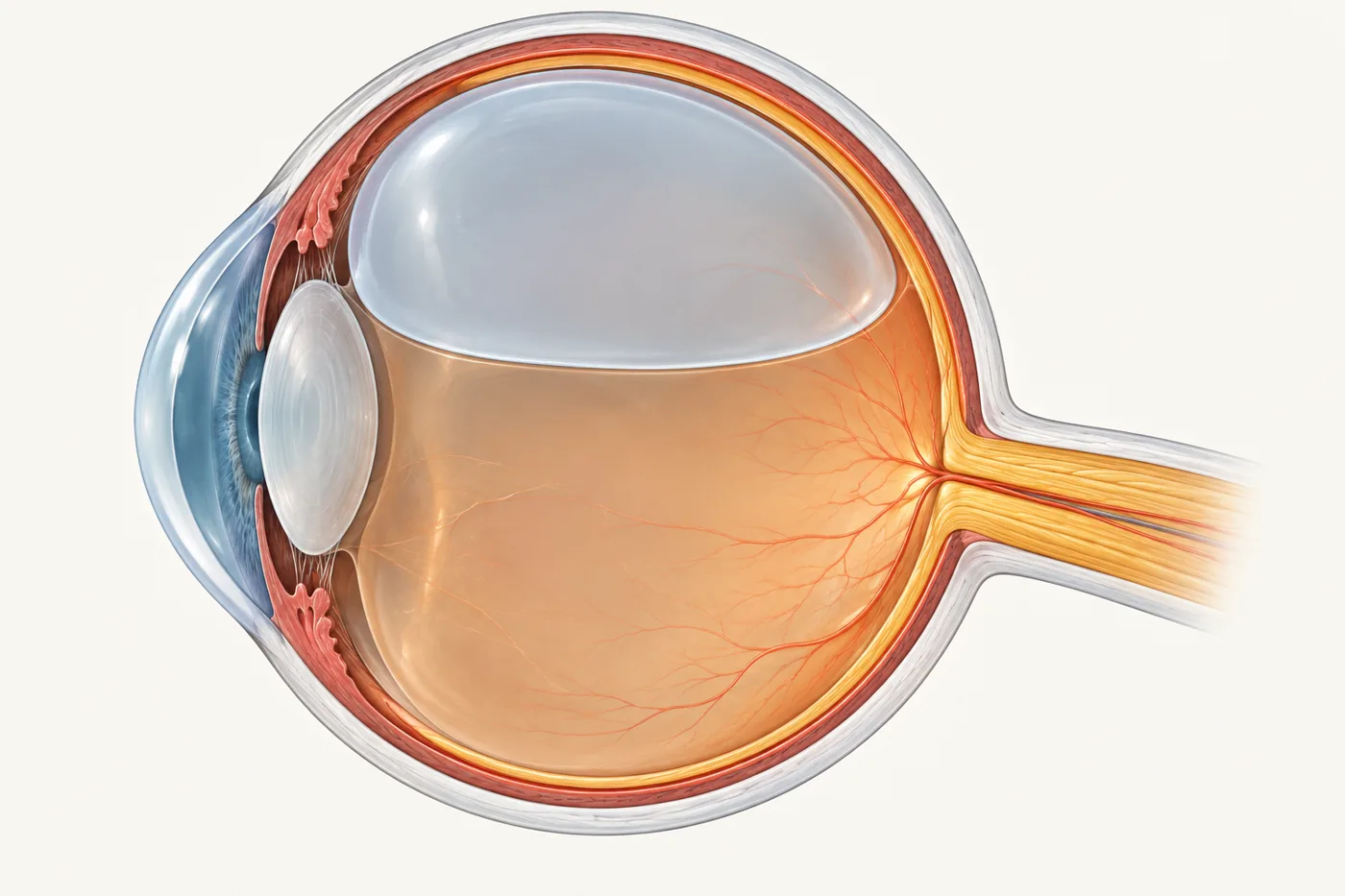
Cross-section of the eye with a gas bubble filling the upper part of the eye above a flat fluid level.
A gas bubble rises to the top of the eye and supports the retina while it heals. Illustration.

What is recovery like after vitrectomy?

You will receive instructions about drops, eye protection, activities, positioning and review appointments. Arrange someone to take you home and discuss any support needed with drops or positioning.

Vision may change over weeks or months. Recovery depends on the original condition, the health of the macula and whether gas or oil is present. Successful repair does not always restore all vision already lost.

Do not drive until your vision and recovery have been assessed and you have been advised it is safe. Follow your individual advice about work, exercise and swimming.

What are the benefits and risks of vitrectomy?

Possible complications include retinal tears or detachment, bleeding, infection, changes in eye pressure, swelling at the macula and reduced vision. Further treatment or another operation may be needed. Serious permanent sight loss is uncommon but possible.

If you still have your natural lens, vitrectomy can speed up cataract development. Dr Chen can discuss combined cataract and retinal surgery or cataract treatment at a later stage. Your retinal condition and lens plan determine which approach is appropriate.

When should I seek urgent advice after vitrectomy?

Mild redness, watering and blurred vision are expected in the first days after vitrectomy. These are not:

Common questions about vitrectomy

From what the operation involves to gas bubbles, positioning, recovery and getting back to work.

Understanding the operation

What is a vitrectomy?

Vitrectomy, or pars plana vitrectomy, is an operation that removes the vitreous — the clear gel that fills the back of the eye. Removing the gel gives the surgeon room to work on the retina and macula: to relieve pulling on the retina, repair a tear or detachment, peel scar tissue, or clear blood from inside the eye. Dr Chen performs vitrectomy at Vision Eye Institute Chatswood.

What does the vitreous gel do, and can the eye work without it?

The gel helps the eye take its shape while it is growing. In an adult eye it is not needed for clear vision. It does not grow back after surgery. The space fills with the clear fluid the eye makes for itself.

How is vitrectomy performed?

Through three small openings in the white of the eye, each under a millimetre across. One carries an infusion that keeps the pressure inside the eye steady, one carries a fine light, and one takes the instruments — the vitreous cutter, fine forceps or a laser probe. The openings are 23, 25 or 27 gauge, chosen for your eye, and usually seal themselves, so stitches are often not needed. See what happens during the operation.

How long does vitrectomy take?

Usually 20 to 60 minutes, depending on the condition, the indication and the individual case. A long-standing retinal detachment, extensive scar tissue or combined cataract and retinal surgery takes longer. Allow several hours at the day surgery from admission to discharge.

Will I be awake during vitrectomy surgery?

Vitrectomy is usually day surgery under local anaesthetic with sedation given by a specialist anaesthetist. An injection around the eye numbs it and keeps it still, so the operation is not painful. A general anaesthetic is used where that suits you or the operation better.

Will I see the instruments during the operation?

No. The anaesthetic stops the eye forming a clear image. Most people describe soft light, shifting colours or a sense of movement rather than detail.

Can both eyes have vitrectomy at the same time?

Almost always one eye at a time. The first eye is allowed to settle, and its vision checked, before surgery on the second eye is considered.

Preparing for surgery

What tests are done before vitrectomy?

A full retinal examination with the pupils dilated, together with imaging: optical coherence tomography (OCT) for cross-sections of the macula, widefield photography for the far edges of the retina, and ultrasound when bleeding blocks the view. If cataract surgery is planned at the same time, the eye is also measured to choose the lens implant.

Should I stop my blood thinners or other medicines before vitrectomy?

Do not stop any medicine unless Dr Chen and the doctor who prescribed it have told you to. Most regular medicines, including blood pressure tablets, are taken as usual with a small sip of water. Aspirin, clopidogrel, warfarin, apixaban and rivaroxaban are reviewed individually, because stopping them carries its own risks.

Can I eat and drink before surgery?

Because sedation or a general anaesthetic is used, you will be asked to fast. As a guide, no food for six hours and no clear fluids for two hours before your admission time. The hospital confirms your exact times when it contacts you.

What should I arrange for the day of surgery?

Someone to take you home; you must not drive yourself. Help with eye drops if you live alone. If head positioning is likely, set up a comfortable place for it before surgery rather than afterwards. Vision Eye Institute sends your admission time, fasting instructions and consent paperwork.

Gas, silicone oil and head positioning

What is put in the eye after the gel is removed?

One of three things. A balanced salt solution, when nothing needs to be held in place. A temporary gas bubble, for a macular hole, retinal tear or detachment, to press the tissue flat while it heals. Or silicone oil, for complex or repeated detachments, or when you cannot posture or must fly. Read more about gas and oil.

What is head positioning, or posturing?

A gas bubble is lighter than fluid, so it floats to the top of the eye. Holding your head in a set position — often looking down, sometimes on one side — puts the bubble against the part of the retina that needs support. Where it is needed, the usual advice is around 45 to 50 minutes in each waking hour for three to seven days, with breaks. Not every vitrectomy needs positioning, and your own instructions come first.

How long does a gas bubble stay in the eye?

The body absorbs it and the eye replaces it with its own fluid. A short-acting gas (SF6) usually clears in about two weeks; a longer-acting gas (C3F8) in about six weeks. The bubble shrinks gradually, then breaks into several smaller bubbles before it goes.

Why can I not fly with a gas bubble in my eye?

Air pressure falls as altitude rises, and the bubble expands. That can raise the pressure inside the eye sharply, causing severe pain and permanent loss of vision. Do not fly, travel over high mountain passes or dive until Dr Chen has confirmed the bubble has gone. Even a small remaining bubble matters.

What must I tell other doctors while there is gas in my eye?

Tell any doctor, dentist, anaesthetist or ambulance crew that you have gas in your eye before you are given pain relief or an anaesthetic. Nitrous oxide (laughing gas) must not be used: it moves into the bubble quickly and raises the pressure in the eye. Carry or wear the gas alert information given to you until the bubble has cleared.

What is silicone oil, and why does it need a second operation?

Silicone oil is a clear medical-grade fluid used when the retina needs support for longer than a gas bubble gives. Unlike gas it is not absorbed, so it stays until the retina is stable. A shorter second operation then removes it, often a few months later.

Recovery and getting back to normal

What will my vision be like after vitrectomy?

With fluid alone, vision is blurred and watery for several days and clears as the eye settles. With a gas bubble, vision is very blurred at first, often only shapes and movement. As the bubble shrinks you see a line across your vision that wobbles when you move, clearer above it than below, then several small bubbles before it disappears.

Will my eye be painful after vitrectomy?

Severe pain is unusual. Most people have an ache, grittiness or the feeling of something in the eye for the first few days, helped by paracetamol. Pain that is severe or getting worse is not expected. See the urgent warning signs.

How do I look after my eye at home?

Use the antibiotic and anti-inflammatory drops exactly as prescribed. Wear the shield at night for the first four to seven days so you cannot rub the eye. Keep water, soap and shampoo out of the eye for two weeks, and stay out of pools and spas for about four weeks. Avoid heavy lifting for two weeks, and leave strenuous exercise and contact sport until you are told they are safe. Follow the instructions written for your operation.

When can I wash my hair or shower after vitrectomy?

Shower from the neck down from the day after surgery. Wash your hair leaning back with your eyes closed, or use a damp cloth, so that nothing runs into the operated eye.

When can I go back to work after vitrectomy?

It depends on the condition treated and on the work you do, and the range is wide: anywhere from two days to two weeks for most people. Manual work, heavy lifting or dusty sites usually wait longer and a review first, and if you are positioning for a gas bubble you will need that time at home. Dr Chen will give you a timeframe for your operation.

When can I drive again after vitrectomy?

Not until your vision meets the standard for your New South Wales licence and you have been told it is safe. A gas bubble reduces both vision and depth perception in that eye, so driving is not appropriate until it has cleared and your vision has been checked.

When can I get new glasses after vitrectomy?

Wait until the eye has settled, at least four weeks, and longer if gas was used or cataract surgery was done at the same time. A prescription measured too early will not last.

Vitrectomy and cataract surgery

Why is vitrectomy often combined with cataract surgery?

In an eye that still has its natural lens, vitrectomy brings cataract forward. Doing both in one operation avoids a second trip to theatre, gives a clearer view of the retina during surgery, and shortens the overall recovery. Staging the two is sometimes the better plan. Compare combined and separate surgery.

If I do not have cataract surgery now, will I need it later?

Very likely, if you are over 50 and still have your natural lens. In that age group about 80 to 90% of eyes go on to need cataract surgery within two years of vitrectomy. Published figures are lower because they mix all ages and count different things: a UK database study reported cataract surgery in around seven in ten eyes by two years, and a 2026 United States registry study of 181,540 eyes of every age estimated 46% within two years, counting only operations actually performed. Under 50 the lens usually stays clear for much longer, although cataract can still develop. Read the article on cataract surgery after vitrectomy.

What if I already have a lens implant?

Then there is no natural lens left to cloud, and cataract is not a consideration. Vitrectomy can still affect how a lens implant sits in some eyes, and Dr Chen will tell you if that applies to yours.

Risks and results

What are the risks of vitrectomy surgery?

Cataract, in an eye that still has its natural lens. A rise in pressure inside the eye, usually managed with drops. A retinal tear or detachment, which is treated if it is found during surgery. Bleeding inside the eye. Swelling at the macula. Infection inside the eye, which is rare but serious. Further treatment or another operation is sometimes needed, and permanent loss of vision is uncommon but possible. These are weighed against what is likely to happen without surgery. See benefits and risks.

Could I need another operation?

Sometimes. A retina can detach again, a membrane can regrow, silicone oil needs a second operation to remove, and bleeding can return. Dr Chen will tell you how likely this is for your eye and what would be done.

Will my vision go back to normal after vitrectomy?

Surgery repairs the structure of the retina. How much vision returns depends on what was damaged before surgery and for how long, particularly at the macula. Some people regain a great deal of vision; for others the aim is to hold the vision they have. Dr Chen will give you a realistic expectation for your eye before you decide.

Which symptoms need urgent review after vitrectomy?

Severe or increasing pain, a sudden drop in vision, a curtain or shadow spreading across your vision, new flashes or a shower of floaters, or increasing redness, swelling and discharge. See the urgent advice and who to call.

Who should I contact for an urgent problem after surgery?

Contact your surgeon first. Phone Vision Eye Institute Chatswood on (02) 9424 9999, Monday to Friday, 8 am–5.30 pm. If your surgeon is not available, go to a hospital emergency department. In Sydney:

  • Sydney Eye Hospital Emergency Department, 8 Macquarie Street, Sydney NSW 2000, (02) 9382 7111. Open 24 hours for adults aged 16 and over, and it specialises in eye emergencies.
  • Royal North Shore Hospital Emergency Department, Reserve Road, St Leonards NSW 2065, (02) 9926 7111. Open 24 hours, and the closest emergency department to Chatswood.

For children under 16, attend a children’s emergency department. Call 000 for a life-threatening emergency.

Where can I read more?

Longer articles by Dr Chen go into these questions in more detail, including what the research shows.

Need urgent eye care?

For new flashes, suddenly increased floaters, a shadow or curtain, or sudden loss of vision, see the urgent assessment advice.

Clinic appointments: (02) 9424 9999

How can we help?

Searches the English information on this website.

Dr Simon Chen practices at

Vision Eye Institute

Level 3, 270 Victoria Avenue
Chatswood NSW 2067
Call 02 9424 9999Get directions
Map showing Vision Eye Institute Chatswood at 270 Victoria AvenueOpen interactive Google Maps