Find the cause first
The assessment checks your glasses prescription, eye surface, cornea, lens position, capsule and retina. Dry eye, residual astigmatism, capsule clouding or macular swelling may need different treatments.
 Dr Simon ChenCataract & Retina Surgeon
Cataract care for eyes with retinal disease, previous surgery or more complex needs, and the exchange of an intraocular lens (IOL) that is no longer serving the eye.
Dr Chen regularly receives complex cataract referrals, including eyes with retinal disease, trauma or complications from previous surgery, and eyes in which the lens implant has moved or needs to be exchanged.

How coexisting retinal disease, a membrane or previous vitrectomy affects lens choice, timing and expectations.
→
Assessment of lens position and the support available for a lens when the usual pathway is more complicated.
Understanding what has already happened, including laser vision correction or trauma, before planning the next step.
Dr Chen has written about two of them for other eye surgeons in Cataract & Refractive Surgery Today.
Pearls for the Yamane Technique
Dr Chen’s step-by-step tips for the Yamane technique, which fixes a replacement lens to the wall of the eye without stitches when the lens’s natural support has been lost.
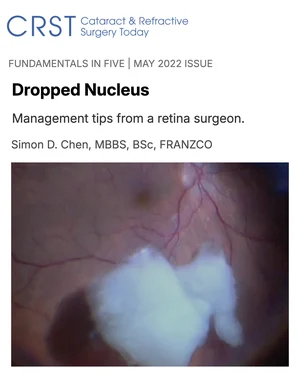
Read the articleDropped Nucleus: Management Tips from a Retina Surgeon
Dr Chen’s guidance on managing part of the cataract falling into the back of the eye during surgery, one of the most feared complications of cataract surgery.
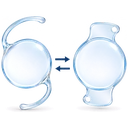
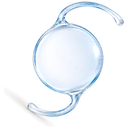
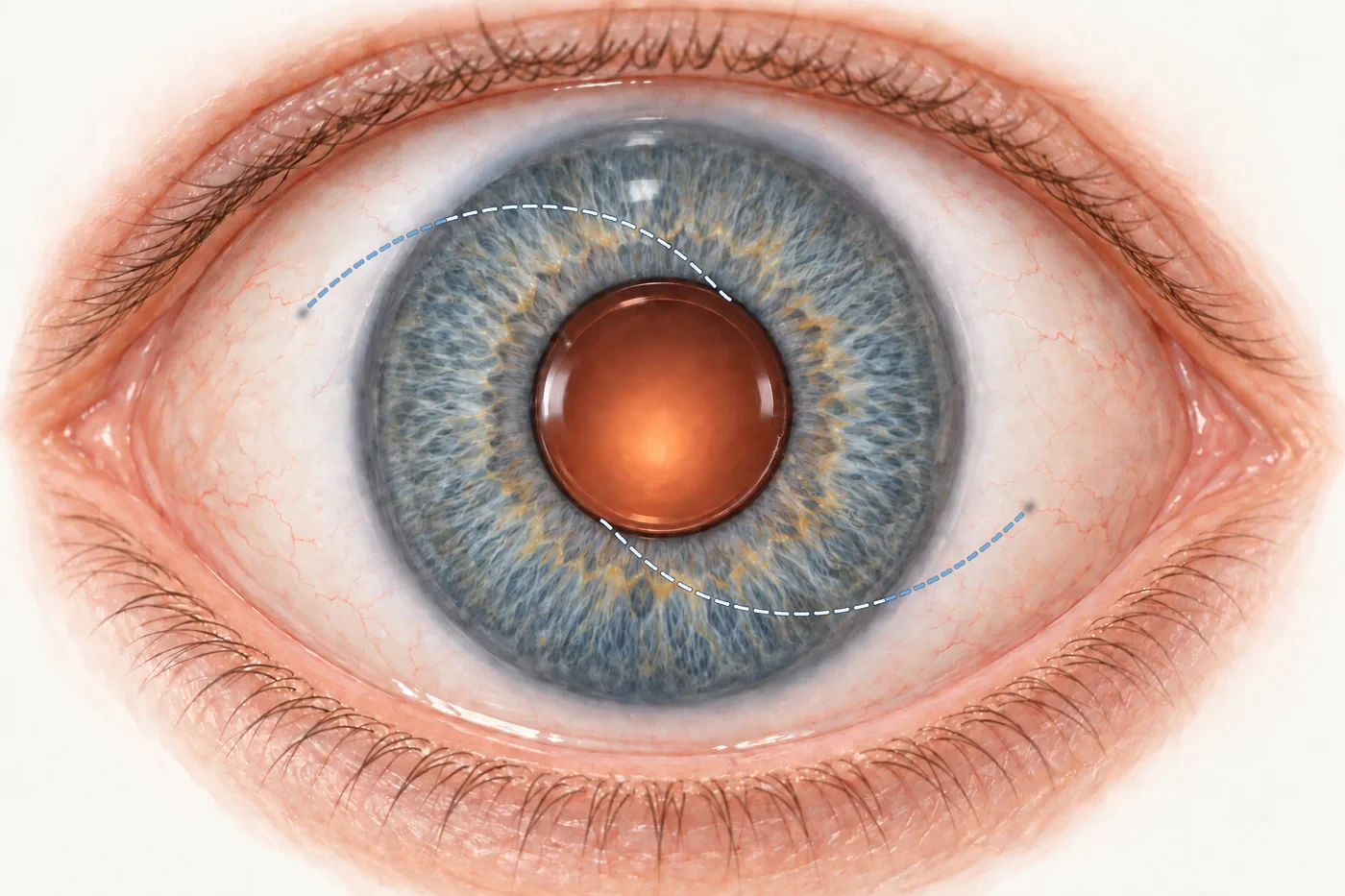
Read the articleAn intraocular lens (IOL) is the artificial lens placed in the eye during cataract surgery or refractive lens exchange. Occasionally it needs to be repositioned or replaced.
The reasons vary: a lens power or design that has not suited the eye, a lens that has moved because the capsule or its supporting fibres have weakened, damage or clouding of the lens material, or the aftermath of earlier surgery. IOL exchange is a more involved operation than first-time cataract surgery, particularly when the capsule can no longer hold a lens and the new one has to be fixed to the wall of the eye by a technique such as Yamane or sutured fixation.
Dr Chen performs IOL exchange and secondary lens fixation, and sets out the options for each eye in plain language, including when leaving a lens in place is the wiser course.
Lens exchange and repositioning call for dedicated instruments. Dr Chen’s practice has:
Blur, haloes or difficulty at night deserve a careful assessment. These symptoms do not automatically mean the implant needs replacing.
The assessment checks your glasses prescription, eye surface, cornea, lens position, capsule and retina. Dry eye, residual astigmatism, capsule clouding or macular swelling may need different treatments.
Explain when symptoms occur, whether glasses help and whether they are improving. Bright rings or streaks and a dark arc at the edge of vision are different problems. A new shadow or curtain needs urgent retinal assessment.
Depending on the cause, options may include treating dry eye, glasses, time for healing or adaptation, capsule laser, repositioning the implant or lens exchange. Selected eyes may be considered for corneal laser or a supplementary lens; suitability requires individual assessment.
Changing a lens means another operation inside the eye. The capsule’s strength, previous surgery and retinal health affect the approach and risk. A different lens may reduce one symptom while increasing the need for glasses.
The assessment looks at both the front and the back of the eye, because both shape the plan.
The position of the existing lens and the support left in the capsule are examined through a dilated pupil, sometimes with imaging of the front of the eye. The cornea is measured and its health checked, since exchange surgery asks more of it. An OCT scan (optical coherence tomography) of the macula and a full retinal examination establish what the retina can be expected to deliver, and whether a retinal procedure should be combined with the lens surgery.
Dr Chen explains what he found, the options that are realistic for that eye, and what to expect from each, including the recovery and the limits on predictability.

Sometimes, yes. The capsule and the eye change with time, so the assessment looks carefully at what support remains. Whether exchange is sensible, and what the new lens should be, is decided eye by eye.
The implant, or the capsule holding it, has moved from its usual position, often because the fibres that support the capsule have weakened. Vision becomes unstable or blurred. Options range from leaving a mildly displaced lens alone to repositioning or replacing it.
Common reasons include previous eye surgery or injury, a very dense cataract, a weak capsule, a small pupil, high short-sightedness or coexisting retinal disease. Each changes the planning, the technique or the expectations.
Yes. Dr Chen assesses the lens and retina together and can plan treatment for both.
Some cataract and retinal procedures can be combined in one operation; others are best staged. The approach depends on your retinal condition and the needs of your eye.
It may help when the implant is responsible, but cannot guarantee that every symptom will resolve. The eye surface, cornea and retina can contribute, and some symptoms settle with healing or adaptation. The likely benefit and remaining need for glasses are discussed before deciding.
Longer articles by Dr Chen go into these questions in more detail, including what the research shows.
Appointments and enquiries are made through Vision Eye Institute Chatswood.
Level 3, 270 Victoria Avenue, Chatswood NSW 2067Optometrists, GPs and ophthalmologists can refer through Oculo or with the PDF referral form.
Vision Eye Institute confirms your appointment after you submit your request. The request form is not for emergencies. A referral is not strictly essential to request an appointment, but you need a valid one to claim a Medicare rebate for your consultation.