
Why is my vision blurry after cataract surgery?Blurred vision after cataract surgery
Blurred vision after cataract surgery can come from early healing, an unsettled tear film or a need for glasses. It can also signal a problem that needs treatment. Sudden or worsening blur needs prompt assessment, even if the eye is not painful. The number of days since surgery is a clue, not a diagnosis.

Why can the eye be blurry in the first few days?
The eye has just had an operation, and clear vision is not always immediate. Drops used to enlarge the pupil can affect focus initially. The cornea—the clear front window of the eye—may be temporarily swollen, and inflammation inside the eye can also affect clarity.
Mild blur that is gradually improving is a different pattern from vision that becomes noticeably worse. However, there is no universal day by which every eye should be clear. The amount of healing needed and other eye conditions make a difference. If vision is not improving as your surgeon expected, contact the team rather than choosing a waiting period from an online timeline.
Use your prescribed drops according to your discharge plan. Do not increase, stop or restart them yourself to treat unexplained blur. A pressure rise or infection can need different treatment from ordinary postoperative inflammation.
Less commonly, a wound that has not sealed can leak fluid and lower the pressure inside the eye. Infection inside the eye is rare but can threaten sight. Both need an examination; you cannot reliably rule them out by how the eye feels or by looking in a mirror. New or worsening blur, particularly with pain, redness or light sensitivity, needs prompt contact with your surgical team.
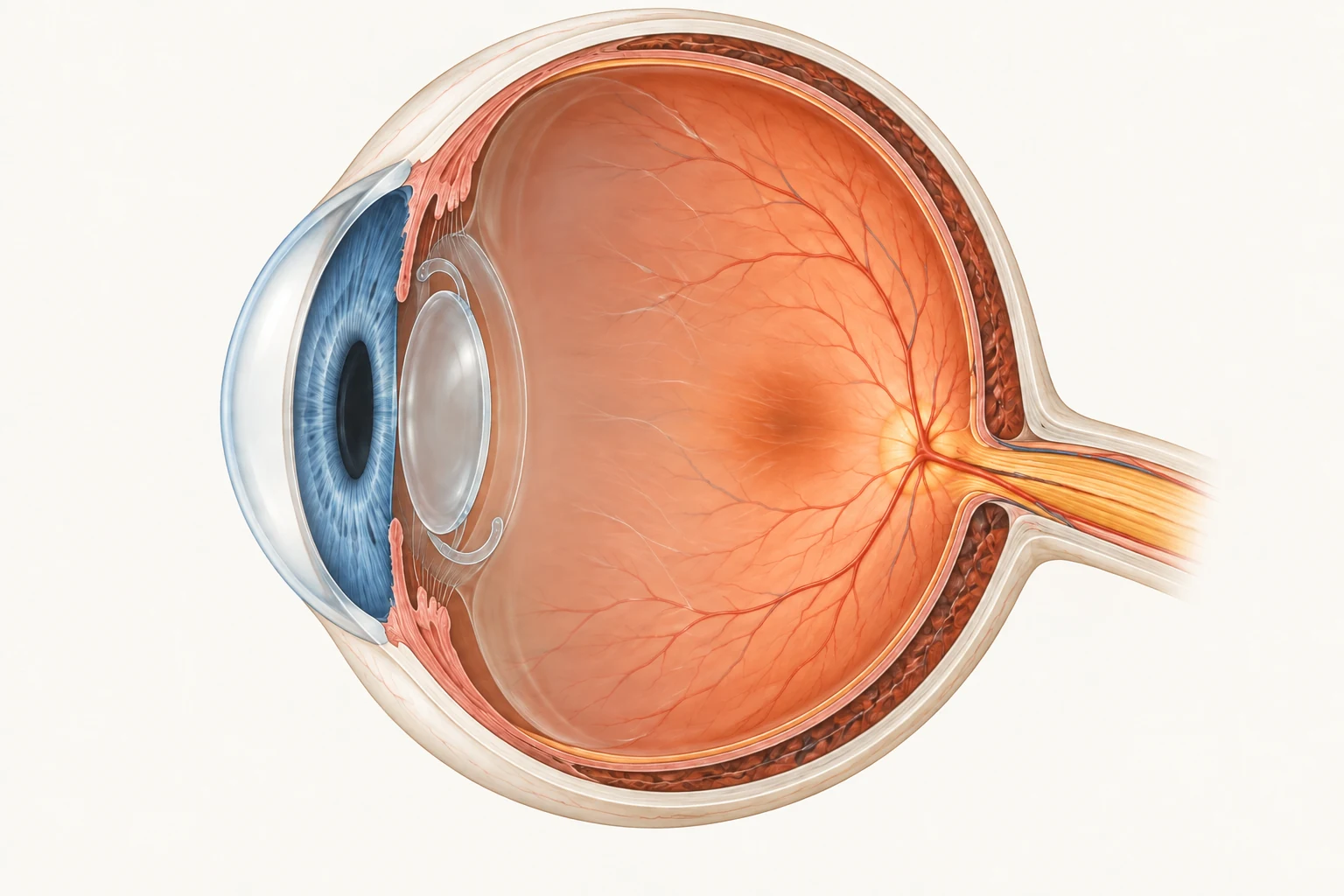
Which parts of the eye can affect clarity?
Cataract surgery replaces the cloudy natural lens. Clear vision still depends on the front surface, the new lens and its supporting capsule, and the retina at the back of the eye working together.
Why does the blur come and go?
An unstable tear film can make vision fluctuate. Dry eye can develop or become more noticeable after cataract surgery, sometimes with grittiness or irritation. A short-lived improvement after blinking may suggest a surface contribution, but it does not exclude another cause.
Mention this pattern at review, including whether blur varies through the day. Your clinician can examine the surface and recommend treatment if needed. Do not assume that lubricating drops are the answer to new or worsening loss of vision.

Could I simply need different glasses?
Yes. Cataract surgery changes the eye's focusing power, so old glasses may no longer suit it. Some people need glasses for reading, distance or both, depending on the planned focus, lens design and remaining focusing error, including astigmatism.
Clear distance vision with blurred small print can be consistent with a lens set for distance. Blur at all distances, new distortion or worsening sight deserves assessment rather than an assumption that glasses will fix it. Once the eye has settled enough for a reliable prescription, a refraction—the test used to measure glasses—helps establish how much the blur is correctable.
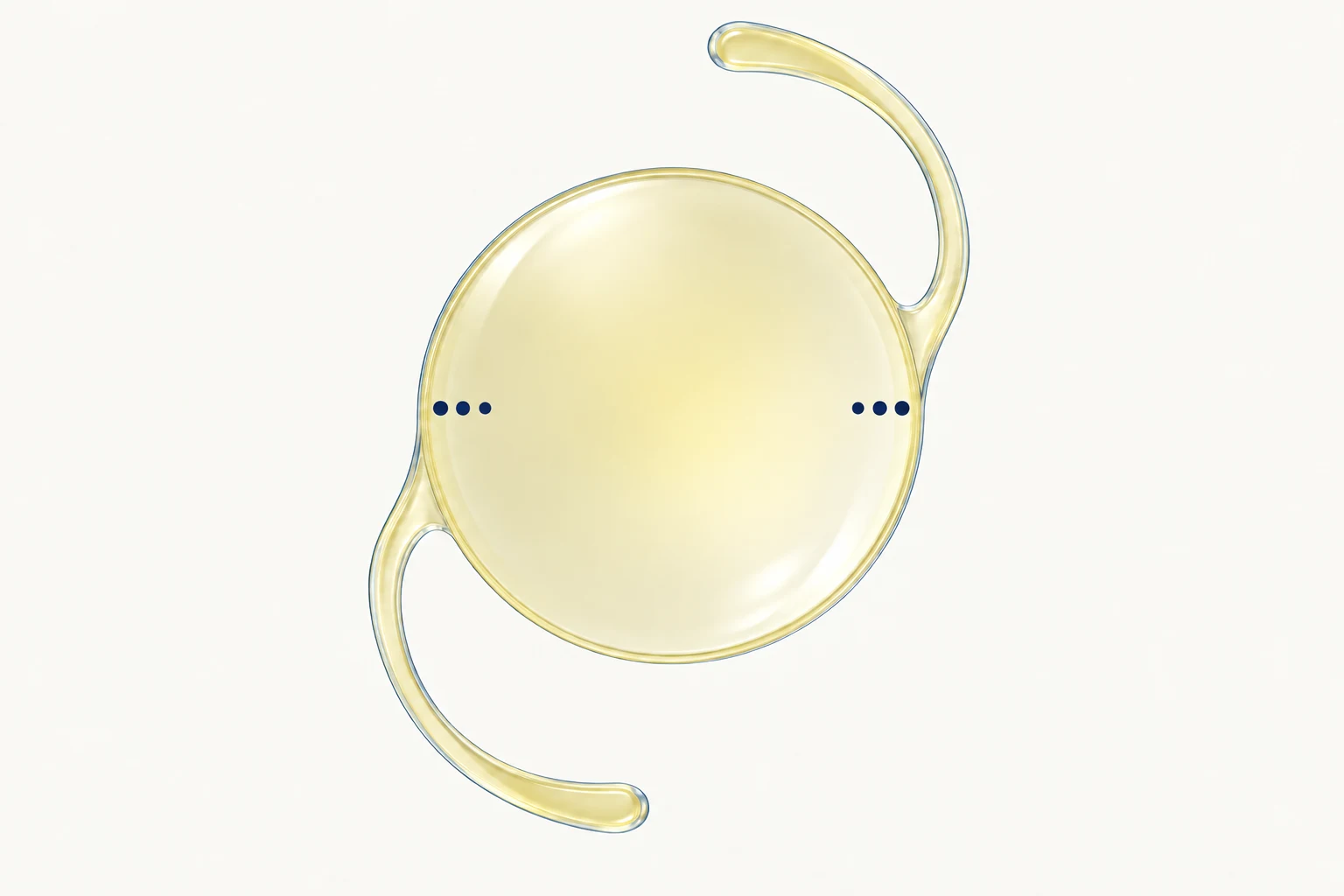
Could a toric lens rotate and change my prescription?
A toric lens implant is designed to correct astigmatism in a particular direction. If it rotates away from its intended position, some of that correction is lost. This can leave or change the eye's refractive error—the glasses prescription—including residual astigmatism, so vision may look blurred or shadowed despite a clear implant. Rotation is one possible explanation, not something you can diagnose from blur alone.
Your surgeon can compare the lens's position with the planned axis and measure the current prescription. The next step depends on the amount and direction of any rotation, how stable the lens is, and other possible causes of blur. Do not assume that every unexpected prescription needs another operation.
Why might vision improve and then become blurry again?
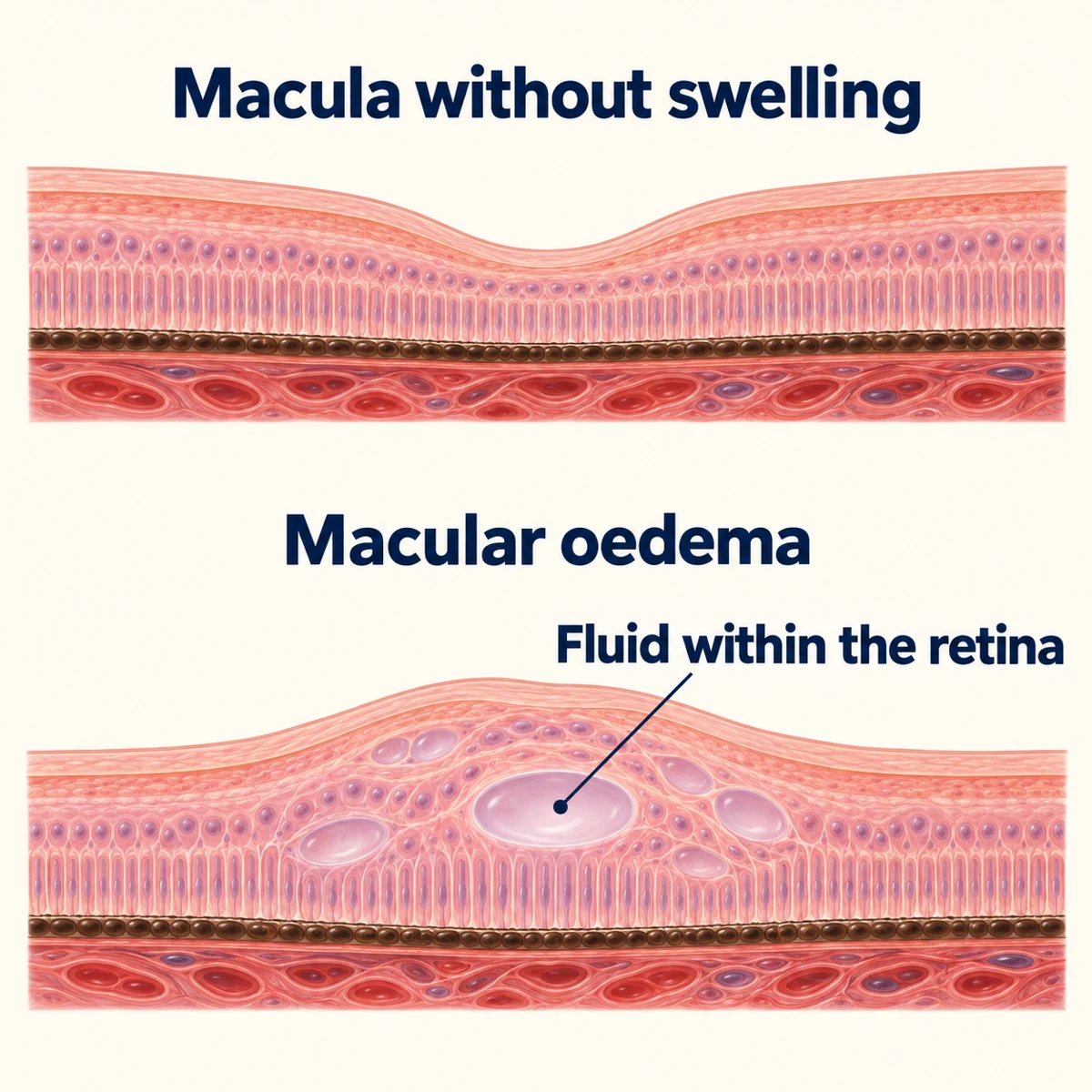
A change after initial improvement should be reported to your surgical team. One possible cause over the following weeks is macular oedema, meaning swelling in the central retina. It can affect reading or make straight lines appear wavy. It may occur after an otherwise uncomplicated operation.
The examination may include an OCT scan, which takes detailed cross-sectional images of the retina. Treatment depends on the findings; anti-inflammatory eye drops are one option for swelling related to surgery, with further treatment considered when appropriate. Do not restart leftover drops without advice.
Other causes include continuing inflammation, a pressure change, surface problems or an issue with the implant's position. If inflammation does not settle or comes back—sometimes called persistent uveitis—it can cause ongoing blur, redness and light sensitivity. It needs assessment rather than simply using more drops yourself.
An implant can also move out of its intended position or become partly displaced (lens subluxation). This may cause blur, glare or double or shadowed vision in one eye. It can happen early or much later. A sudden change in vision should be assessed urgently; a gradual change also deserves a timely review. Timing alone cannot distinguish these causes.
What causes cloudy vision months or years later?
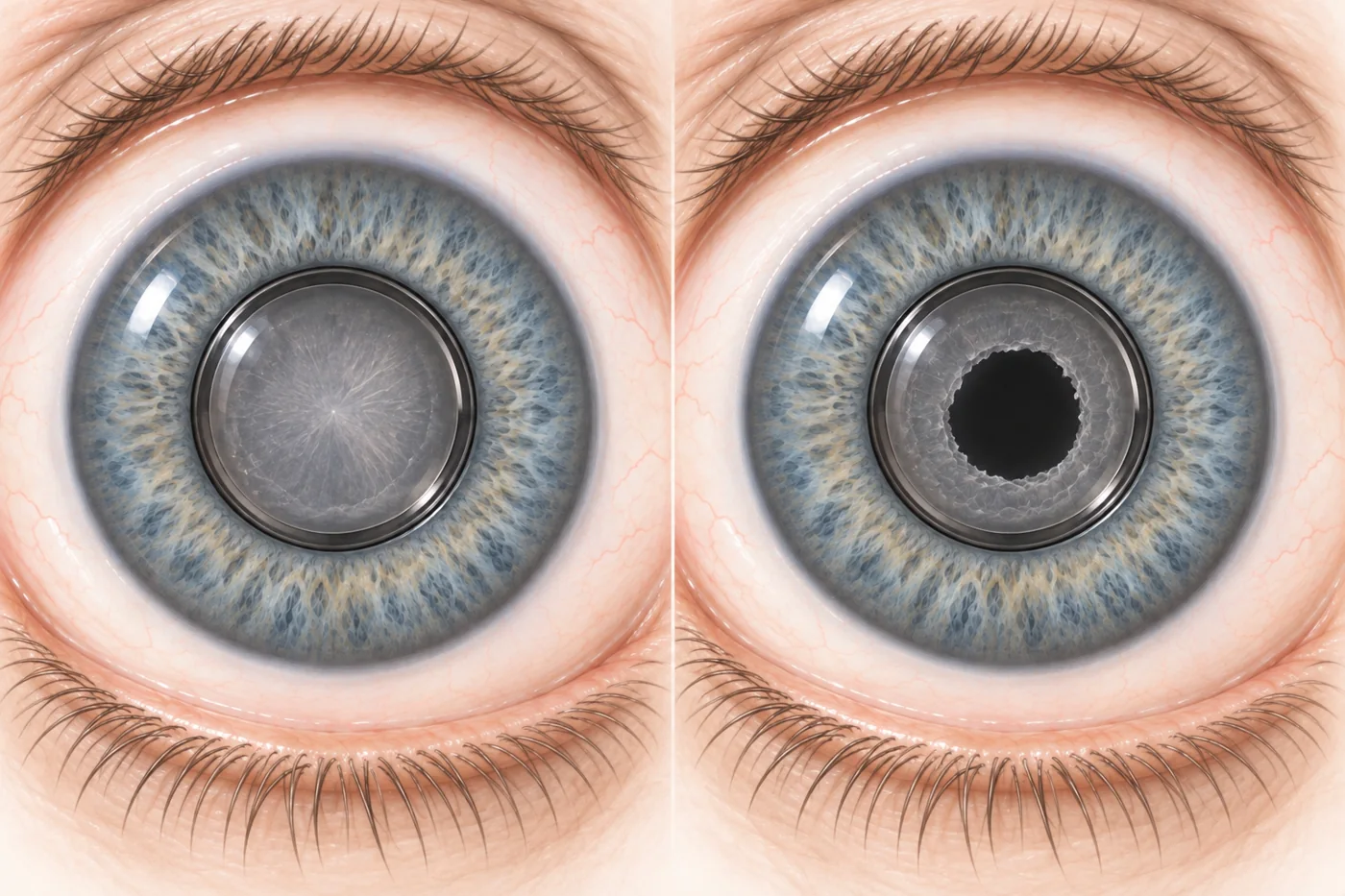
One cause is posterior capsule opacification (PCO). The thin capsule behind the implant becomes cloudy and scatters light, producing mistiness or glare. The original cataract has not grown back. PCO often develops months or years later, although it can appear earlier.
If examination confirms that PCO is affecting vision, a YAG laser capsulotomy can create an opening in the cloudy capsule. It treats that capsule clouding; it does not correct every cause of postoperative blur. The eye should be checked before deciding on laser treatment, particularly if there may be a retinal or lens-related explanation.
The capsule clouding and YAG section explains this treatment in more detail.
Can the retina or another existing condition limit the result?
Yes. Removing a cataract clears one source of blur, but it does not repair damage elsewhere in the eye. An epiretinal membrane, macular degeneration or another retinal or optic-nerve condition may limit sharpness even with a clear implant.
A retinal problem can also arise after surgery. New flashes, many new floaters or a curtain need urgent assessment for a retinal tear or detachment. Retinal detachment can be painless, so absence of pain is not reassurance.
Is a dark crescent the same as blurred vision?
A crescent at the outer edge of vision can sometimes be a lens-related optical effect called negative dysphotopsia. It is different from general loss of focus. However, you cannot safely distinguish that effect from a retinal shadow by reading a description online.
Have a new shadow assessed urgently first. Once the retina and other causes have been checked, the separate negative dysphotopsia guide explains the symptom and its management.
What will help at my review?
Tell the team when the change began, whether it was sudden or gradual, and whether vision initially improved. Describe whether it affects distance, reading or both, and mention distortion, pain, redness, flashes, floaters or a shadow. Bring your drop list and discharge information. You do not need to identify the cause yourself.
| What you notice | What to do |
|---|---|
| Sudden or worsening blur, flashes, many new floaters or a curtain | Contact the surgical team urgently, even if there is no pain. |
| Blur with increasing redness, pain or light sensitivity | Contact the surgical team promptly for an eye examination. |
| Gradual or fluctuating blur without warning symptoms | Tell the team and arrange a review; the pattern alone cannot establish the cause. |
The clinician may check your vision and glasses prescription, the cornea, inflammation, eye pressure, implant and capsule, and the retina. A retinal scan may help when central vision is affected. Treatment follows the cause: sometimes surface care or glasses are enough; other findings need specific treatment.
Keep your planned follow-up, but seek earlier advice for a change. For everyday questions about washing, exercise, work and driving, see the cataract recovery information. Do not drive while vision is blurred or until your treating team has confirmed you can safely return to driving.
When should I seek urgent help?
Contact your surgeon or the surgical team's urgent number immediately if you have:
- A sudden drop in vision, or vision that is getting worse.
- Increasing or severe eye pain, especially with redness or reduced vision.
- New flashes, a sudden increase in floaters, or a dark curtain or shadow.
- Increasing redness, marked light sensitivity or discharge with deteriorating vision.
Use the contact details on your discharge instructions. If you cannot reach the team promptly, attend an emergency department. Do not wait for your next booked check-up or use a routine website enquiry form for urgent symptoms. Have someone else drive you.
These symptoms do not necessarily mean a serious complication has occurred. They mean the eye needs to be examined to exclude problems such as infection, a wound leak, a pressure rise or a retinal tear or detachment. You do not need to have every warning symptom before seeking help.
Sources and further reading
- National Eye Institute: cataract surgery.
- NHS: cataract surgery and warning symptoms.
- Calderdale and Huddersfield NHS: cataract surgery patient information.
- National Eye Institute: macular oedema.
- Cambridge University Hospitals: PCO and YAG capsulotomy.
- National Eye Institute: retinal detachment.
- Ishrat and colleagues: dry eye after cataract surgery.
- Chu and colleagues: postoperative macular oedema risk factors.
- ESCRS: guidance on residual astigmatism and toric lens alignment.
- Schwartzenberg and Pavlin: postoperative wound leak and low eye pressure.
- Neatrour and colleagues: persistent inflammation after cataract surgery.