Planning around your eye
Detailed imaging maps the front of your eye. Dr Chen uses these measurements to plan the position and size of the laser treatment.
 Dr Simon ChenCataract & Retina Surgeon
Image-guided laser precision for selected steps of cataract surgery. Dr Simon Chen offers femtosecond laser technology for cataract surgery.
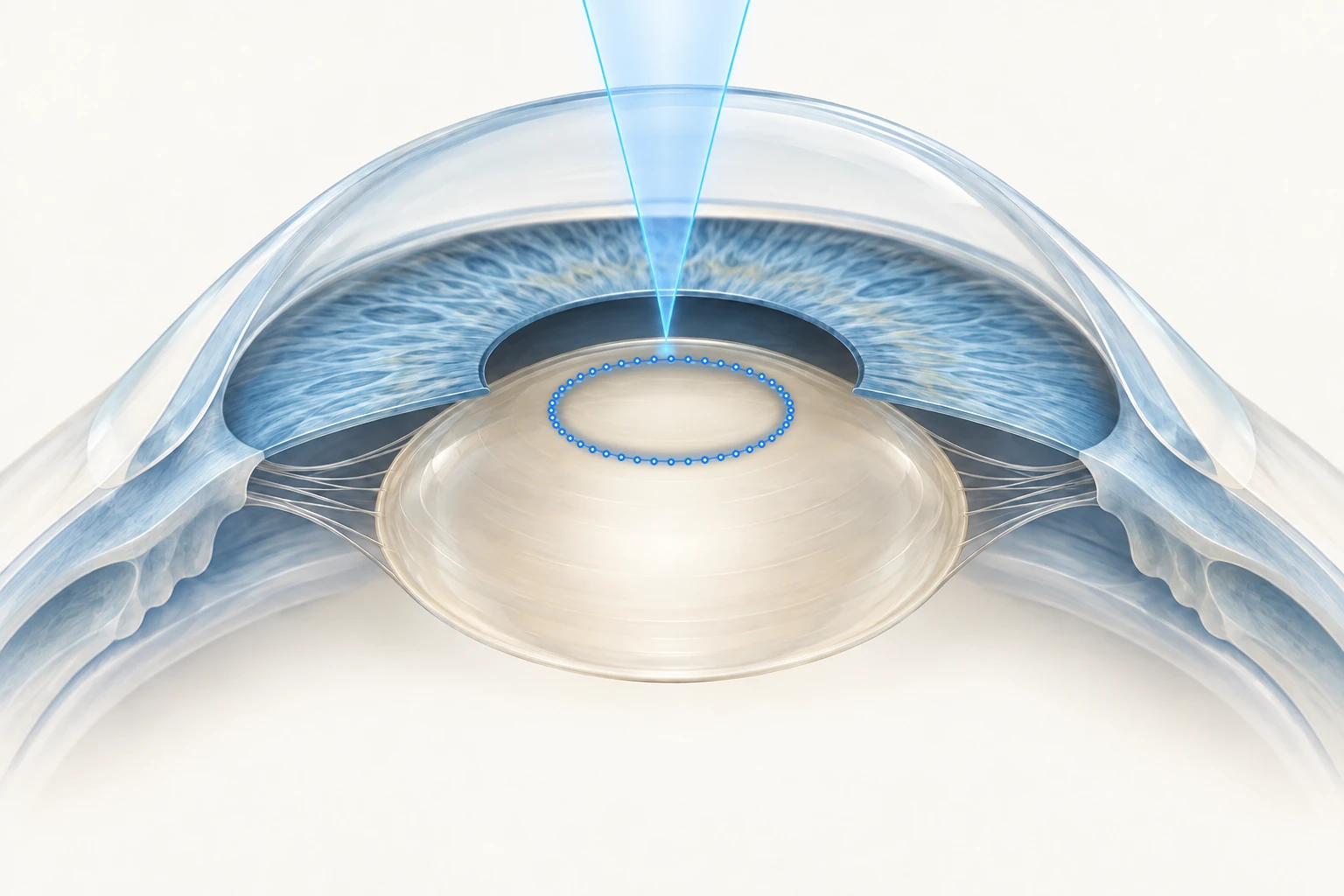
Detailed imaging maps the front of your eye. Dr Chen uses these measurements to plan the position and size of the laser treatment.
The laser can create a circular opening of a planned size in the thin capsule around the lens. This gives a reproducible opening for cataract removal and implant placement.
Pre-dividing the cataract with the laser can reduce the ultrasound energy needed to remove it. The amount of reduction depends on the cataract and the surgical technique.
Reducing ultrasound energy may help limit loss of corneal endothelial cells—the delicate cells that keep the cornea clear by controlling its water content.
This is particularly relevant when the cornea is compromised, such as in Fuchs’ endothelial dystrophy. A better corneal outcome is not assured: studies in Fuchs’ dystrophy have not consistently shown an advantage over standard surgery.
These are potential advantages within the operation. Greater technical precision does not guarantee better final vision or faster recovery for every patient.
Cataract surgery replaces the cloudy natural lens with a clear artificial lens. A femtosecond laser can help Dr Chen perform selected steps before he completes the operation.
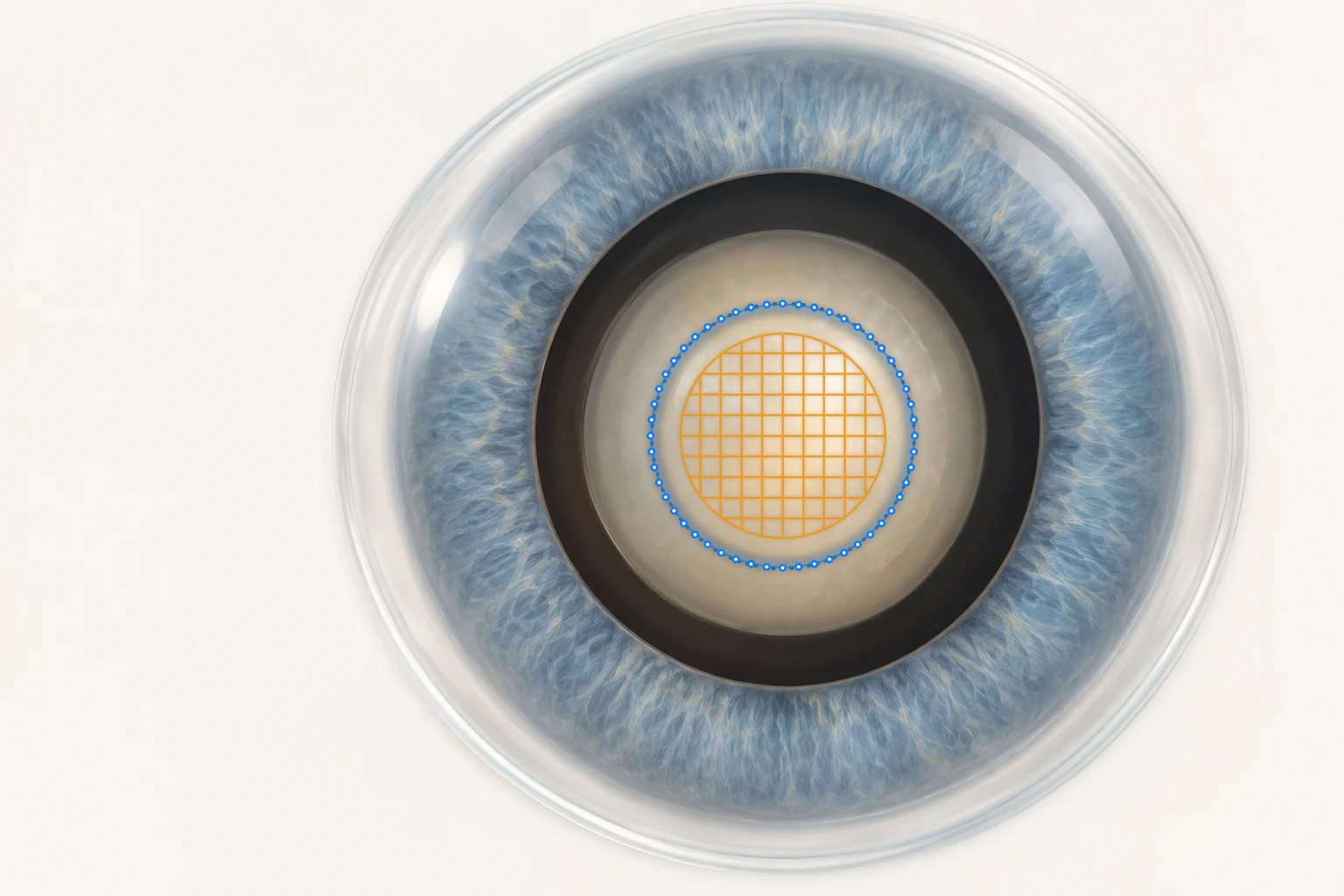
The laser system images your eye. A contact interface holds it steady while the treatment is planned and delivered. ZEISS CALLISTO eye digital guidance then carries your measurements into the rest of the operation, including the alignment of a toric lens.
The laser can open the lens capsule and divide the cataract into smaller pieces. It can also create corneal incisions when these are included in the plan.
Dr Chen removes the cataract using an ultrasonic phacoemulsification probe and inserts the chosen lens implant.
It is a variation of cataract surgery. A femtosecond laser assists with selected steps; the surgeon removes the lens material and places the implant.
It can fragment the cataract, but the lens material still needs to be removed by the surgeon.
Both standard and laser-assisted cataract surgery can provide excellent vision. Laser offers precision in particular steps, but final vision also depends on the lens implant, the health of your retina and the rest of your eye. Dr Chen will explain what benefit he expects from using it in your case.
You will still need eye drops and follow-up visits. Your recovery is individual; it depends on your eye and the complete operation, including any combined procedures.
Longer articles by Dr Chen go into these questions in more detail, including what the research shows.
Appointments and enquiries are made through Vision Eye Institute Chatswood.
Level 3, 270 Victoria Avenue, Chatswood NSW 2067Optometrists, GPs and ophthalmologists can refer through Oculo or with the PDF referral form.
Vision Eye Institute confirms your appointment after you submit your request. The request form is not for emergencies. A referral is not strictly essential to request an appointment, but you need a valid one to claim a Medicare rebate for your consultation.