

Laser vision correction
- Reshapes the front surface of the eye; the natural lens stays in place
- Suits many younger eyes with a stable prescription
- Does not address the loss of near focus that comes with age
- Not an operation inside the eye
 Dr Simon ChenCataract & Retina Surgeon
Lens replacement surgery, or refractive lens exchange (RLE), replaces the clear natural lens with an artificial lens to reduce dependence on glasses. It is the same operation as cataract surgery, chosen electively, so suitability and alternatives are assessed carefully.

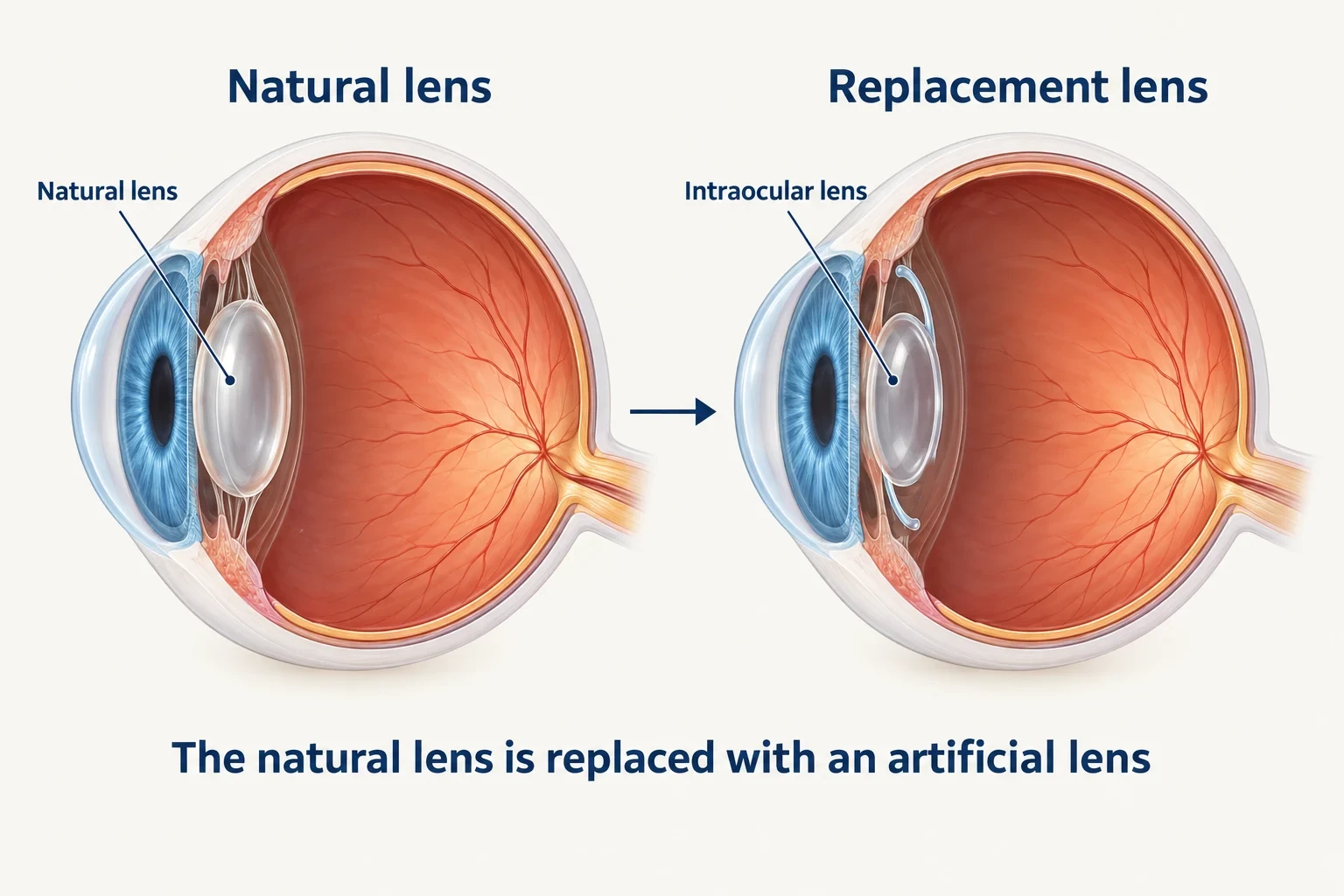
Replacing the natural lens. Refractive lens exchange uses an intraocular lens to change the eye’s focus.
Enlarge diagramRefractive lens exchange replaces the natural lens of the eye with an artificial lens before a cataract has formed, to change the focus of the eye and reduce dependence on glasses.
The operation is the same as modern cataract surgery: through a very small opening the natural lens is removed and a folded intraocular lens (IOL) is placed in its position. What differs is the reason. In cataract surgery a cloudy lens is removed because it is affecting vision. In RLE a clear lens is removed by choice, which makes the decision an elective one and the suitability conversation more important, not less.
Dr Chen approaches RLE conservatively. It suits some eyes well, but if glasses, contact lenses or laser vision correction are a better choice, Dr Chen will say so.
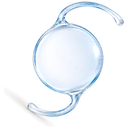
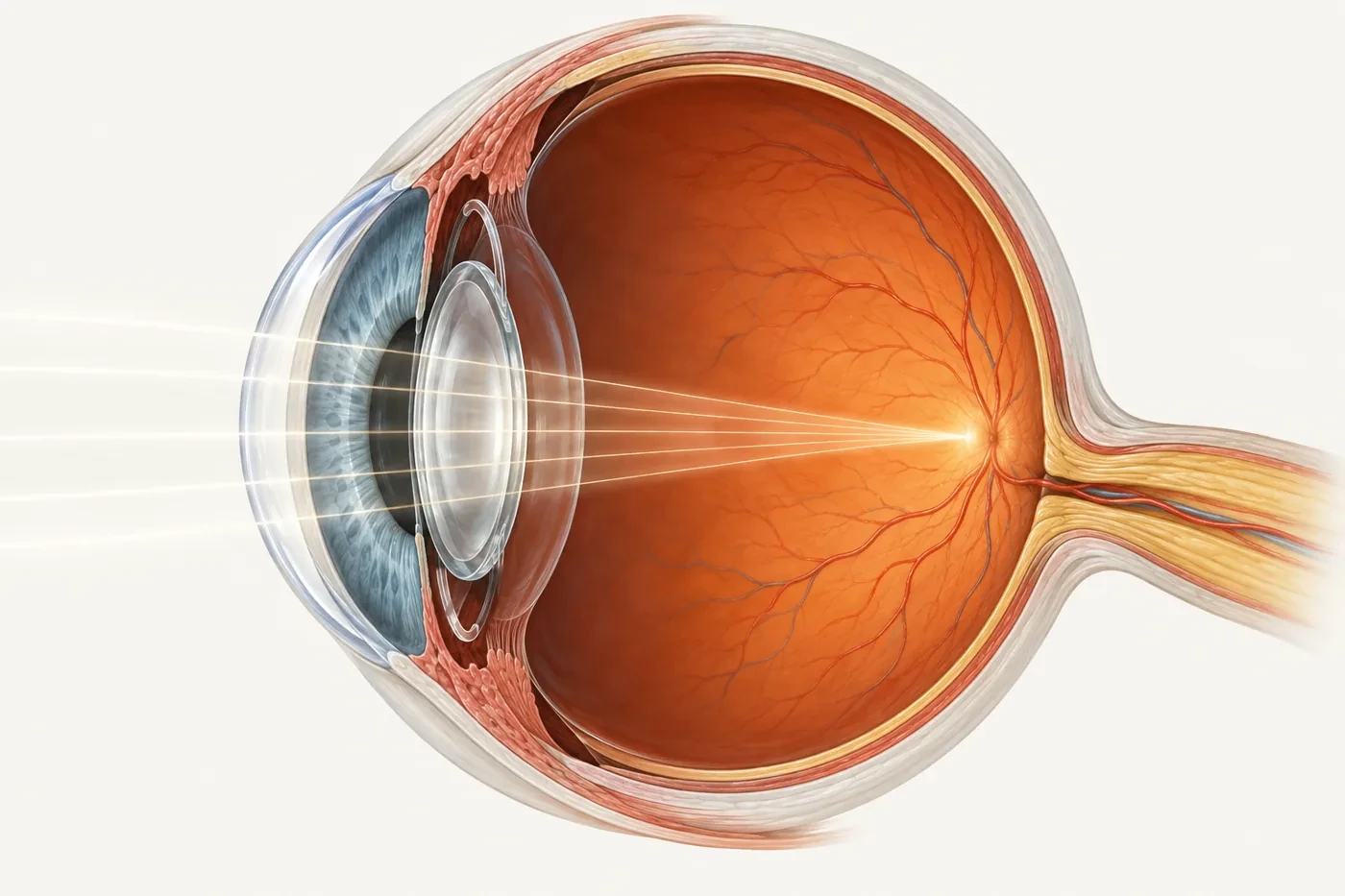
People usually arrive at RLE after weighing glasses, contact lenses and laser vision correction. This is how the three approaches differ.
Educational comparison only. Which option, if any, suits an eye is decided at the consultation.
The assessment looks at the whole eye, because RLE is only sensible when the rest of the eye is healthy and the expectations are realistic.
Measurements of the length and curvature of the eye (biometry) predict the lens power. A map of the cornea shows astigmatism and any irregularity, and whether earlier laser treatment has changed it. The surface of the eye is checked for dryness, which affects both the measurements and the result. An OCT scan (optical coherence tomography) of the macula and a dilated examination of the retina confirm the back of the eye is healthy; this matters particularly in short-sighted eyes, which carry a higher risk of retinal detachment after lens surgery.
Because Dr Chen works across both the lens and the retina, the retinal side of that assessment is part of the same conversation rather than a separate referral.

RLE stands or falls on the lens choice, because the lens sets the focus of the eye for good.
Monofocal, toric, extended-depth-of-focus and multifocal designs each place focus at different distances and carry different trade-offs. The comparison, with a diagram of which distances each design typically brings into focus, is on the lens choices page.
Compare intraocular lens designsWhich pairing suits an eye is decided at the consultation; none is promised in advance.
Read the monofocal, EDOF and multifocal guides →
The explanation below describes this graphic. Drawing it requires JavaScript.
A general guide to what each design is intended to do, not a prediction for an individual eye. Glasses are often still helpful beyond the shaded range. Reading depends on the lens, the focusing target chosen, lighting and the health of the eye.
Monovision is a way of planning the focus of the two eyes together. It can reduce reliance on glasses, but involves compromises that need to suit you.
One eye is usually aimed at distance and the other at a closer range. Your brain uses the clearer image for the task. This approach can be used with monofocal lenses during cataract surgery or refractive lens exchange.
The term is used in different ways. With lens surgery, it often describes a smaller difference between the eyes, also called mini-monovision. This may help with computer or arm’s-length tasks while leaving glasses useful for small print.
The eyes may feel unbalanced, and depth judgement or vision in dim light may be less comfortable. Adaptation varies. Some people prefer matching distance focus in both eyes and reading glasses instead.
A contact-lens trial can help assess tolerance, particularly if you have not used monovision before. It cannot reproduce every aspect of an implanted lens or guarantee the surgical result. Your eye health and daily tasks still guide the recommendation.
Discuss night driving, sport, fine close work and your previous experience with contact lenses. Glasses may still help for demanding tasks, and no focusing plan guarantees complete freedom from them.
Removing the natural lens permanently removes its remaining ability to change focus. An implant can broaden the useful range or be paired with monovision, but it does not restore youthful accommodation. This is an important reason to be cautious in younger eyes.
No. An IOL sits inside the eye and is intended to remain there; it is not removed for cleaning or sleeping. A phakic lens is a different operation: an additional lens is placed inside the eye while the natural lens remains.
Healing and measurement uncertainty mean the target cannot be guaranteed. Glasses or contact lenses may be the simplest solution. Laser correction or another lens procedure is considered only after assessing the cause, stability and additional risks.
Yes. Removing the natural lens prevents a cataract forming in that lens, but does not prevent retinal disease, glaucoma or dry eye. The capsule behind the implant can also become cloudy. Continue appropriate eye checks.
Understand the refractive errors you are trying to correct →
RLE carries the same risks as cataract surgery.
RLE follows a similar surgical and recovery pathway to cataract surgery. Arrange transport, use your prescribed drops and attend the planned reviews. Early improvement and complete settling are different: vision and comfort may change over the following weeks, and adjustment to a new optical design may take longer.
Discuss work, driving and travel before choosing a date. Seek prompt advice for deterioration, significant pain or new retinal symptoms. A promise of glasses-free vision or a quick return to every activity should not replace an individual plan.
The operation is the same; the difference is the reason. In cataract surgery a cloudy lens is removed. In RLE a clear lens is removed to change the focus of the eye and reduce dependence on glasses.
Laser reshapes the cornea and leaves the natural lens in place. RLE replaces the lens, so it can address the age-related loss of near focus and higher prescriptions, but it is an operation inside the eye with a different set of risks.
No. The artificial lens does not develop a cataract. Some people later need a brief laser treatment if the capsule behind the lens becomes hazy.
It can be, but highly short-sighted eyes carry a higher risk of retinal detachment after lens surgery, so the retina is examined carefully and the trade-off is discussed openly.
Usually one eye at a time, a short interval apart, so the first result can inform the plan for the second.
A contact-lens trial can be stopped, but an implanted-lens plan is not as easily reversed. Glasses or contact lenses may help rebalance the focus; another procedure has additional risks and may not be suitable. Discuss the alternatives before committing to surgery.
Longer articles by Dr Chen go into these questions in more detail, including what the research shows.
Appointments and enquiries are made through Vision Eye Institute Chatswood.
Level 3, 270 Victoria Avenue, Chatswood NSW 2067Optometrists, GPs and ophthalmologists can refer through Oculo or with the PDF referral form.
Vision Eye Institute confirms your appointment after you submit your request. The request form is not for emergencies. A referral is not strictly essential to request an appointment, but you need a valid one to claim a Medicare rebate for your consultation.